Tuesday, June 8, 2010

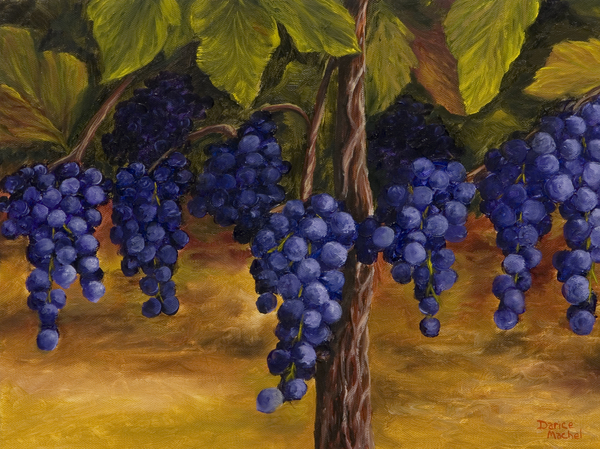
"I am the vine."

From this week's edition of The Set Table, the Chayyei Yeshua piece I wrote on John 15:1-17:

In scripture, the vineyard represents Israel (Isaiah 5:17, Mark 12:1–12). But in John 15:1–17, Yeshua seems to employ the vine image differently. We glean more insight from a parable of Ezekiel:
A great eagle . . .came to . . . a cedar [of Lebanon], . . . broke off its topmost shoot and carried it away . . . He planted it like a willow by abundant water, and it sprouted and became a low, spreading vine. (Ezekiel 17:3-6, excerpted.)
The parable goes on to pronounce judgment on the vine–that is, the king of Judah–for breaking the covenant. Then the Lord declares:
I myself will take a shoot from the very top of a cedar and plant it; I will break off a tender sprig from its topmost shoots and plant it on a high and lofty mountain. On the mountain heights of Israel I will plant it; it will produce branches and bear fruit and become a splendid cedar. (17:22–23.)
Christopher M. Tuckett observes: “The context of Ezekiel 17 is itself all but explicitly ‘messianic’ in that it refers to the promised restoration of the Davidic monarchy in the form of king Jehoiachin” (“The Parable of the Mustard Seed and the Book of Ezekiel,” The Book of Ezekiel and Its Influence, p. 97). Thus, Yeshua’s claim “I am the true vine,” read together with Ezekiel 17, assumes messianic overtones, which are only heightened when we recognize that the vine of Ezekiel’s parable started out as a branch.

Yeshua goes on to invite each of his disciples into a personal, abiding relationship with him. In his book, The Hasidic Parable, Aryeh Wineman contrasts eighteenth-century Hasidism with “earlier stages of Jewish mysticism in which the mystic remained an isolated individual, not serving as a leader of center of any kind of human community”:
Gershom Scholem defines the innovation of eighteenth-century Hasidism whereby the mystic–who is turned inward and away from society–becomes at the same time the center of a community.
Likewise, Yeshua established himself as the center of his community and the source of its life and love. Paul Philip Levertoff calls this love “the realization of the highest ideal of Chasidism–i.e., achdut ‘unity,’ . . . a closeness of union approaching to identity (Acts 4:32).”

We naturally focus on the disciples’ need to abide in Yeshua. But this passage also reveals the amazing dependency of Yeshua on his followers: “You did not choose me, but I chose you and appointed you” (John 15:16). Just as Ezekiel prophesied that the vine “will produce branches and bear fruit,” so Yeshua reveals that he personally chose his disciples “to go and bear fruit—
fruit that will last.” How? “If you remain in me and my words remain in you, ask whatever you wish, and it will be given you” (John 15:7). Praying the way Yeshua teaches means (a) remaining in him by obeying his commands and (b) having his words in us.

As our prayers turn toward the restoration of Israel, we do well to adopt the words of Psalm 80:14–19, which employs the same vine image in a prayer for (Messianic) redemption:
Return to us, O God Almighty! Look down from heaven and see! Watch over this vine, the root your right hand has planted, the branch/son you have raised up for yourself. Your vine is cut down; it is burned with fire; at your rebuke your people perish. Let your hand rest on the man at your right hand, the son of man you have raised up for yourself. Then we will not turn away from you; revive us, and we will call on your name. Restore us, O LORD God Almighty; make your face shine upon us, that we may be saved.

Sunday, June 6, 2010

Why give tzedaka?

"God loves a cheerful giver!"

If you grew up in the church or in the Messianic world, you've most likely heard those words from Paul as part of an exhortation to make a financial contribution to some cause.

A recent article from Cross Currents discussed the motivations behind giving tzedaka within the Orthodox Jewish community:
“Judaism isn’t so concerned with personal reaction; altruism is not about one’s ego. Even if people believe that they will be rewarded in the Next World for good deeds, the emphasis is on action in this world, and on doing what’s right.”
As [Stephen Linenberger] conducted interviews with children, he found that Jewish children didn’t quite know how to answer the question, “How do you feel about the person you’re helping?” It’s not that they don’t feel empathy; it’s that doing “what’s right” (aka a Mitzvah) is independent of their personal feelings. As he put it:
They are action oriented. They take themselves out of the picture. It’s not about some primitive response to the person in need, and ego centered evaluation about whether I feel like helping. It’s about responding to a need. It’s almost as if, contrary to what the research has always supported, the disregard for empathy heightens altruism rather than suppresses it.

Friday, June 4, 2010

Guest post: Shabbat as "bride" and "queen"

A few weeks back, I posted some thoughts from Judith Shulevitz on "light Sabbath" vs. "dark Sabbath." Messianic blogger Paula from Grasping Mashiach made a great comment illustrating how Shulevitz's "light/dark Sabbath" is really a recapitulation of the teachings of the sages about Shabbat as bride/queen, which is itself based on the Torah's command to remember/observe (zachor/sh'mor):
The idea of Sabbath as light and dark reminds me of the rabbinic concepts of Shabbat as bride (Shabbat HaKallah) and queen (Shabbat HaMalchah), framed in more palatable and modern language. Samuel Dresner in his book “The Sabbath” explains bride as feelings of love and desire toward the Sabbath and queen as laws of observance regarding the Sabbath.

Chazal (Shevu’oth 20b) relate that remembering Shabbat and keeping Shabbat were given by HaShem in a single utterance (based on Exodus 20:8 in relation to Deuteronomy 5:12). Remembering is the bride, the light part of Sabbath, the longing for the experience of freedom, peace, and rest. Keeping is the queen, or the dark part of Sabbath, the laws and statues. But both remembering and keeping, bride and queen, light and dark are part of the same entity. As Dresner puts it;

"One can never truly know the inward feeling (bride) of Sabbath without the outward form (queen)."

Like a queen the Sabbath is a reigning monarch who arrives on the seventh day despite the will or liking of man. When a queen is in the palace everything must be in order and certain protocol followed, yet it is the protocol or “rules” that enable the experience of inner peace.

With this in mind I wonder if just a “little” darkness is the answer regarding Shabbat? Certainly, people have to start somewhere in observance, but inevitably it would seem that “remembering” and “keeping” or emotional desire and specific observance/discipline must have equal balance and weight in order to celebrate Shabbat to its full and intended extent.

Thursday, May 27, 2010

The Art of Shabbat

For this week's pre-Shabbat meditation: I've been thinking of ways Shabbat is like art. Here's what I've come up with so far:
  • Art is not purely functional (i.e. a plain old door vs. a beautiful artistic door, a walk/don't walk sign on a street corner vs. the LOVE sculpture in the center of a courtyard).
  • Art elevates common things.
  • Art inspires and energizes (like a song that sticks in your head so that you can't stop singing it throughout the week).
  • Creating art takes practice and lots of learning.
  • Art points to an Artist.
Can you add any similarities between art and Shabbat to the list?

Tuesday, May 25, 2010

An interesting proposition...

...from Orthodox Jewish theologian Michael Wyschogrod (someone all Messianic Jews owe it to themselves to be familiar with). He writes:
Israel...should declare itself a constitutional monarchy ruled by a successor to King David, represented by a “regent safeguarding the Throne of David until such time that divine intervention identifies the rightful heir to the Davidic kingdom.”
Thoughts?

I wish I was in New York to attend this lecture on "Jewish covenantal theology" at First Things from someone whom R' Meir Soloveitchik called "perhaps the most original Jewish theologian of the past half century."

For more on Wyschogrod, I highly recommend this essay by Christian theologian R. Kendall Soulen.

Friday, May 21, 2010

"Light Sabbath" and "Dark Sabbath"

From an article on the Sabbath Manifesto website:

Judith Shulevitz, author of the new book “The Sabbath World: Glimpses of a Different Order of Time,” wrote in the April 16 Washington Post’s “On Faith” column that people have largely rejected the Sabbath because “there’s a light Sabbath and a dark Sabbath.”:

“The light Sabbath features community and festivity and what a famous professor of psychology once called ‘freedom from all slavery to the clock.’ The dark Sabbath bristles with rules and regulations, and at the extreme, fanaticism…Americans may recall the light Sabbath with a certain fondness, at least if they hanker after a calmer way of life. But they are mostly thrilled that over the past 50 years we’ve done away with the dark, coercive one.”

“But what if I told you that we could have some of the light Sabbath back, if we’d accept just a little bit of the dark one? We could have something to which we’d probably say yes–namely, more time for self and family and neighborhood–and all we’d have to do is let ourselves be governed by a few nos, a few rules about not working at a pre-arranged time. Conversely, if we don’t accept a no or two, then the kind of time that used to be protected by the Sabbath–time during which everyone leaves the office or factory and turns to one another for entertainment and sustenance–is in danger of disappearing.
Do you regularly find yourself exhausted and in need of rest? Do you struggle with overcommitting yourself, or feeling unfulfilled by many of the activities you have to do? If so, perhaps 'freedom from all slavery to the clock' would be a needed reprieve.

What do you think: is Ms. Shulevitz correct? Do we need a little bit of the "dark Shabbat" in order to regain the "light Shabbat"? What would that look like for individuals--what kinds of habits, practices, or rules? For communities?

Friday, May 14, 2010

I've Got A Feeling

Tonight I'm going to a cool Kabbalat Shabbat service in the city with my wife, my sister, and a friend. I'm really looking forward to it!

Here's a fun video in honor of Shabbat: