
This week, Tablet Magazine's "Unorthodox" podcast featured an interview with Deborah Pardo Kaplan, a Messianic Jew. Check it out here:
http://www.tabletmag.com/jewish-life-and-religion/207690/the-other-cheek
Friday, July 15, 2016

Thursday, May 26, 2016
Jews as Christians: the falsification of biblical history in art
 |
| From http://jewishjesusart.com - all rights to original artists. |
In both paintings Mary and Joseph appear as stylish fair-skinned, fair-haired Christians. To emphasize that these are Christian ceremonies they are conducted by high church officials. But these ceremonies and settings are alien to the origins of this Jewish couple from a rural village in Nazareth—when, in fact, the actual betrothal and their lives had everything to do with Judaism. All indications from the Gospel depictions say that Mary was immersed in Jewish life and practices.
...
Why should we care about these misrepresentations? A contentious and often violent relationship between Christianity and Judaism began in the first century, as the emerging Christianity sought to establish itself as separate from its deep roots in Judaism. Remnants of that divide continue to reverberate today. And art (particularly paintings and stained glass windows) was a major vehicle in Medieval and Renaissance Europe for teaching the populace about Church doctrines and perceptions—ones that often embodied anti-Semitism.
...
I wish that art historians, curators, and art critics would follow Pope Francis’ lead and finally acknowledge the falsification of biblical history in artworks that denied the Jewish identities of Jesus and Mary.
In excruciatingly detailed commentaries on artworks by professionals in the field the glaring feature of identity theft is almost never noted. Doing so would take nothing away from the magnificence of these works and their contribution to the development and enhancement of art and culture. But it would contribute to a long-overdue participation in the reconciliation of Christianity and Judaism. It would affirm the two sides of the Jesus and Mary story: Jesus and Mary the dedicated Jews and Jesus and Mary whose lives inspired a new religion.Check out the exhibit "Putting Judaism Back in the Picture: Toward Healing the Christian/Jewish Divide" at http://jewishjesusart.com.
Sunday, October 26, 2014
On this day in Messianic Jewish history
A cool new blog emerged recently, On this day in Messianic Jewish history, thanks to Messianic Jewish thinker/theologian Richard Harvey.
Follow the project on Facebook:
Follow the project on Facebook:
 |
| https://www.facebook.com/MessianicJewishHistory |
Sunday, May 4, 2014
On J4J's video and the artwork of Marc Chagall
Like many others, I had a negative reaction to Jews for Jesus's video "That Jew Died for You." I noticed that the website for the video highlights the artwork of Marc Chagall. Since others have also appealed to Chagall's work as a way of understanding the video, I thought the comparison was worth scrutinizing further.
 |
| Jews for Jesus's "That Jew Died for You" |
First: I don't think anyone believes the video deserves to be compared to Chagall on aesthetic merits alone. Chagall was a brilliant Jewish artist whose work has deeply moved countless people. "That Jew Died for You" is a low-budget film short produced for the internet to drive conversation and scandalize viewers. I understand the comparisons to Chagall as either an implicit defense of the artistic choice to depict Jesus in the Holocaust or as an attempt to associate the video with the power of Marc Chagall's work. In both cases, I think the association fails. Here's why.
 |
| Marc Chagall's "White Crucifixion" |
One of the things that is immediately striking about Chagall's imagery of Jesus is that it clearly portrays Jesus as a Jew. By making Jesus resemble (both physically and in garb) the Jews from other time periods in history who appear next to him in various tableaus, Chagall presented a startling contrast to traditional Christian depictions of Jesus. By contrast, the J4J video does the exact opposite, portraying Jesus exactly as evangelicals have portrayed him for the last fifty years (down to the colored sash and glowing aura). This befuddling choice undermines the supposed point of the video: instead of being "just another Jew," Jesus is a glowing alien/foreigner from another time and place (and culture?). No tallis or tefillin on Jesus here...in this video, it takes a Nazi to recognize Jesus as a Jew.
Now, to be fair, I don't think Chagall's approach (making Jesus look like any other Jew) would have worked in this medium. After all, in Chagall's work, the primary thing that identifies the individual depicting Jesus as Jesus is the crucifixion itself. This leads me to my next point.
The second thing that I think puts this video at odds with Chagall's imagery is the question of the identification of Jesus's sufferings with the sufferings of the Jewish people. Chagall's works show Jesus being crucified while Jews are being subject to pogroms, etc...equating Jewish suffering with Jesus' suffering. The J4J video shies away from making this equation in the video. Nowhere is this more clear than when Jesus's hand appears from offscreen to help a young Jewish woman who has stumbled. Chagall's work points at that young woman stumbling and says, "Right there--that is Jesus stumbling." This video makes a different claim...which leads me to my third point.
The glowing hand of Jesus is the basis of my third and harshest criticism of "That Jew Died for You." For me, that was the moment at which the video completely shipwrecked itself on an iceberg of religious delusion. The appearance of Jesus' hand helping the girl up deeply betrays the commitment that all true art makes to its viewer, which is to tell the truth. No matter how much Christians might wish that Jesus's hand had reached out to help the stumbling girl headed to Auschwitz, the truth (and the challenge...and the shame) of the Holocaust is that, in the case of the girl at Auschwitz, that is exactly what did not happen. (I say "in the case of the girl at Auschwitz" because there are cases where help DID come from Christians: Corrie Ten Boom's family and numerous other Christians risked their lives to save Jews from the Holocaust. Their stories deserve and need to be told, now more than as ever.)
Now I don't think anyone would object to a Christian pointing to Corrie Ten Boom's actions and saying, "There, THAT is worthy to be associated with the hands of the Risen One." However, for Christians, the shame (and challenge) of the Holocaust was that this did not happen more...that so many were silent. The imagined hand of Jesus in this video not only fails to acknowledge this, it not-so-subtly denies it, glorifying an alternative reality which is in actuality a complete fantasy. This is not art, this is a parlor trick and is certainly not worthy of comparison to a true artist like Chagall.
I appreciate the desire to say that Yeshua was not ever present with the hand that persecuted the Jewish people throughout history...and that his presence was always with the hand of help. However, Yeshua bound himself to the actions of his disciples in his world, commanding them to be his hands and feet in a world which, for the time being, cannot see him. The fantasy hand of Jesus at Auschwitz promotes an alternative vision, a form of religion which uses Jesus's image as a panacea to try to cover over the pain and suffering which threatens God's reputation in the world as if to say, "We don't have to look at these things as they really are, because really Jesus makes it better behind the scenes." This is not the biblical picture of redemption; it a false image, one which deserves to be soundly rejected.
In conclusion, I do not believe that the producers or writers of this video seriously believe any of these things I am critiquing. I can believe, however, that the video's writers and producers imagined themselves to be doing something in the vein of Chagall's work. That fantasy deserves the same evaluation I assign to the glowing hand of Jesus at Auschwitz: wishful thinking.
I appreciate the desire to say that Yeshua was not ever present with the hand that persecuted the Jewish people throughout history...and that his presence was always with the hand of help. However, Yeshua bound himself to the actions of his disciples in his world, commanding them to be his hands and feet in a world which, for the time being, cannot see him. The fantasy hand of Jesus at Auschwitz promotes an alternative vision, a form of religion which uses Jesus's image as a panacea to try to cover over the pain and suffering which threatens God's reputation in the world as if to say, "We don't have to look at these things as they really are, because really Jesus makes it better behind the scenes." This is not the biblical picture of redemption; it a false image, one which deserves to be soundly rejected.
In conclusion, I do not believe that the producers or writers of this video seriously believe any of these things I am critiquing. I can believe, however, that the video's writers and producers imagined themselves to be doing something in the vein of Chagall's work. That fantasy deserves the same evaluation I assign to the glowing hand of Jesus at Auschwitz: wishful thinking.
Thursday, April 24, 2014
Forward: South Dakota's Tiny Hillel Embraces Messianic Jews
An interesting story from Forward.com: South Dakota's Tiny Hillel Embraces Messianic Jews:
Hanna’s discomfort grew at the start of the fall semester, when another Messianic joined, bringing the membership to three Messianics and two traditional Jews, as two Jewish members had graduated the preceding spring.
Hanna went to Hunt to discuss his misgivings.
“I did understand where he was coming from,” Hunt said. “Having two-thirds Messianic Jews on the board of the Hillel is controversial.”
But Hunt insisted that with so few Jews, they should continue focusing on their shared identity.
By this point, Hanna was splitting his time between SDSU and the University of South Dakota, where he was working toward a doctorate in social psychology and behavioral neuroscience. He was also preparing to get married. These constraints, along with his dismay at the club’s new direction, moved him to leave B’rith Sholom at the beginning of this school year.
Hanna also emailed Hillel’s headquarters in Washington about the club’s status around this time, but he received no response. A Hillel representative told the Forward that the organization has no policy on Messianic Jewish participation at its branches and no statement on this issue.
But Hanna’s departure did result in one change: The remaining members amended the constitution to allow all members to serve as officers.
“This is just one step to tikkun olam, repairing the world,” Hunt said.
Wednesday, January 29, 2014
Messianic Jewish synagogue Ruach Israel mentioned on JewishBoston.com
An article (by Rabbi Emma Gottlieb of Temple Beth David) answering the question "Do you think it's possible to be both Jewish and Christian?" gives three distinct examples of why this not a "black and white question" in the contemporary world. She mentions Messianic Jews under the section on "Jews who come to connect with the teachings of Jesus":
In what I found to be a very equitable gesture, the article closed with the following statement:“Messianic Jews” are not considered part of the wider Jewish community). However, Jewish law is clear: once a Jew, always a Jew. Someone who is born Jewish but who converts to Christianity becomes an apostate (in Jewish legal terminology), but they can take steps to return to the Jewish community at a later time should they wish to do so. The Jewish community cannot turn such Jews away, although rabbis may have different requirements for their reentry depending on denominational ideology and understandings of Jewish law.

Do you want to learn about another perspective on this question? You can read about the beliefs of a local congregation that belongs to the movement of Messianic Judaism here.The link is to an article on Ruach Israel's website entitled "What Exactly Is Messianic Judaism?"
A hearty yasher koach to Rabbi Gottlieb and JewishBoston for choosing to delve into the complexity of this question in the modern era and for recognizing the Messianic Jewish perspective rather than demonizing, mischaracterizing, or feigning ignorance.
Sunday, August 18, 2013
Messianic Jews at the World Congress of Jewish Studies
Last week Christianity Today described Another Acceptance Milestone for Messianic Jews:


Messianic Jews—those who believe in Jesus—only comprise a small portion of the international Jewish community. But that hasn't stopped them from making their first official appearance at the 16th World Congress of Jewish Studies.Here is the list of panelists and their presentations (from the conference website):
Hosted in Jerusalem, this year's meeting featured more than 1,000 Jewish lecturers and panelists, including the first panel focused on the role and influence of Messianic Jews. And according to Jews for Jesus senior researcher Richard Harvey, who served as one of the four panelists, the discussion was a very good first step.
"It means that Messianic Jewish Studies, or studies of JBY, is firmly on the agendain the academic world as a branch of Jewish studies," Harvey wrote on his blog regarding the panel, entitled "Contemporary Jewish Believers in Yeshua (Jesus): Trends and Turns after World War I." "There can be no denying that not only is the Messianic Jewish movement worldwide a significant phenomenon worthy of serious study, but that it also demands the highest level of academic excellence and scholarly integrity to do it full justice."
- Hanna Rucks - "New Voices": The Russian Contribution to Messianic Jewish Theology in Israel
- Gershon Nerel - A Jewish Church: The Debate over the Establishment of a Hebrew Christian Denomination between the World Wars
- Richard S. Harvey - The Conversion of Non-Jews to Messianic Judaism: A Test Case for Membership and Identity in a New Religious Movement
- Yaakov Ariel - Walking Together, Walking Apart: Evangelical Christianity and Messianic Judaism
'via Blog this'
Monday, July 29, 2013
Messianic Jews in New York Times, Christianity Today
Messianic Jews were mentioned in several major media outlets in the past week.
From the caption for the above image: "the Orthodox Jewish Bible...created by the Artists for Israel International Messianic Bible Society...incorporates Yiddish and Hasidic cultural expressions into an English translation of both the Old and New Testaments."
New York Times
From the New York Times article One App, More Than 400 Languages, on the runaway success of YouVersion's Bible app:
Today, the app contains everything from the New International Version to “The Message,” an ultramodern interpretation that reads like a juicy novel. It also includes the so-called Orthodox Jewish Bible, which was actually developed for a religious sect known as Messianic Jews, who believe that Jesus is the Messiah that the Jews await.
 |
| Photo credit: New York Times. |
The Orthodox Jewish Bible is certainly among the Messianic movement's more idiosyncratic translations (which is saying a lot). This fit right into the article's emphasis on the wide range of different Bible translations available through YouVersion. That said, the two other major Messianic Jewish translations, the Complete Jewish Bible and the Tree of Life version, are also available through YouVersion.
Christianity Today

Christianity Today's recent issue on Leviticus mentions Messianic Jews in two of its cover stories. In Learning to Love Leviticus, Christopher J. H. Wright explains how Christians can treat biblical "as a paradigm or model for our personal and social ethics in all kinds of areas: economic, familial, political, judicial, sexual, and so on"...without "upholding all the jots and tittles." In a paragraph on the food laws, he writes:
The distinction between clean and unclean animals and foods was symbolic of the distinction between Israel as God's holy people and the Gentile nations (Lev. 20:25–26). In the New Testament, that separation is abolished in Christ, as Paul says in Ephesians 2. Through the Cross, God has made the two cultures one new humanity. And as Peter discovered through his vision in Acts 10, before going to the home of the Gentile Cornelius, what God has called clean should no longer be called unclean. Today some Messianic Jewish believers choose freely to observe the kashrut regulations as a mark of their Jewish community and cultural identity. But in their unity, believers are free from food laws.Kudos to Wright for not ignoring the existence of Messianic Jews in the body of Messiah who observe the kashrut regulations of Leviticus. That being said, I found his claim confusing. Are the kashrut restrictions truly disruptive to unity? (In most Messianic Jewish synagogues I've visited, Jews and Gentiles experience free fellowship over kosher meals.) Furthermore, in conflicts over food between "stronger" and "weaker" brethren, didn't Paul instruct the strong to compromise for the sake of the weak? (This particular line of argumentation assumes that Messianic Jews observing kashrut would be identified with the weak. I myself don't necessarily read the passage that way, but perhaps Wright or those who agree with him do.)
The argument against the food laws from unity strikes me as rather weak on its own. In fact, I suspect that other theological convictions (such as the abrogation of the law in Christ or the supposed dangers of law observance) are really behind this argument, lending it support in the minds of those who accept it. Perhaps as post-supersessionist interpretation of the New Testament gains traction among contemporary scholars, Wright will find this reading of Acts 10 (and other related passages) challenged.
~
Readers who found Wright's comments on Messianic Jews rather uninformed may find much more to appreciate in Philip Cary's Gentiles in the Hands of a Genocidal God. Cary's thesis is that reawakening an awareness of the theological and historical significance of Gentile identity can significantly transform Christian perspectives on the Old Testament's troubling genocide passages. Christians tend to identify too much with Israel, Cary contends, to the point where they forget their place in the narrative. "We have been reading Israel's Scriptures so long that we forget that these words were not originally addressed to us.":
In fact, with respect to the command to exterminate the Canaanites, our position is less like Israel's and more like that of Rahab, the Canaanite prostitute in Jericho who befriends the Israelite spies. She has not taken part in Israel's exodus, but she has heard of it and believes it. She knows the name of the Lord, the God who has given the land to Israel, and she confesses that he is God of heaven and earth (Josh. 2:9–11). She is a believer, and eventually will be included in Hebrews 11's great litany of heroes who lived by faith. But she is not an Israelite. She is a Canaanite who hopes to live, not die.
As a believer, Rahab can have hope, because the threat she faces is not so much moral as religious. It is not as if the Israelites were so much more righteous than every other nation (Deut. 9:4–6). Israel is holy not because of their own righteousness but because the Lord loves them and chose them as his people. And the holiness of the Lord is a kind of jealousy that claims Israel as his own, not allowing other nations to lead them into worshiping false gods (7:5–8). That is the holiness that leads to herem, the extermination of Rahab's people for their idolatry.
My proposal is that to read this story properly, as Gentiles, is to put ourselves in Rahab's place. Our origin lies not with the people who hear the command to kill, but with those who are to be killed. We belong with those who should be devoted to destruction because we offend against the holiness of God. And yet what has actually happened is that, like Rahab, we have received mercy through faith in the God of Israel.
To read the Canaanite genocide this way is to have our hearts formed the way the New Testament intends for Gentiles.
I'm sure I wasn't the only one shocked to find this in Christianity Today. (For anyone troubled by the "fire and brimstone" tone of the above passage, make sure to read the whole article; Cary also discusses the beautiful consequences of identifying with Rahab, i.e. "You could say that what frees Rahab from herem is hesed, the lovingkindness of her relationship with Israel.")
Before concluding the article, Cary discusses to the historical relationship between Gentile Christians and Israel:
"In you all the families of the earth shall be blessed" (Gen. 12:3, esv)...Christ himself fulfills these words, making the blessing of Abraham into a blessing for all who believe.
Because of this gospel blessing, we can hear "I am the Lord your God" as words addressed to us, since we too share the faith of Abraham. But notice what this commits us to. It means we Gentile believers in Christ are to be a blessing to the people of Israel, "that by the mercy shown to you they also may now receive mercy," as Paul says (Rom. 11:31, esv).
Alas, what sort of blessing have Gentile Christians been to Israel? So much persecution of the Jews fills our history. Even our evangelism has often meant attempting to put an end to them. As Messianic Jews have recently pointed out, that is what Christians did by demanding that Jews who accept Christ must cease to practice Judaism—in effect ceasing to be Jews. It meant turning them away from their covenant with the God of Abraham and Moses, as if we had forgotten that this was none other than the God and Father of our Lord Jesus Christ.
Here Cary demonstrates familiarity with the central claims in Messianic Jewish thought--the unity of Jewish identity and Jewish practice, the validity of "Judaism," the deep flaws in the historic Christiant "gospel" of "Jesus, not Judaism." (Readers who find merit in Cary's insights here may want to check out his Jonah commentary before Yom Kippur.)
~
One other article in CT which may be of interest to Messianic readers is Daniel Harrell's account of The 30-day Leviticus Challenge his church did. I was half-expecting a conclusion like this: "After a whole month of these tedious and difficult laws, we were all more grateful for God's grace which sets us free from the law." Sure enough, Harrell set up a conclusion remarkably similar to this...and then elegantly debunked it:
But if reading Leviticus only succeeds in making you feel bad for being a lousy Christian, you've missed its point. Leviticus isn't in the Bible merely to show you your need for grace. It's in the Bible to show you what grace is for. The ancient Israelites were already chosen people before God gave them the Law. The Law's purpose was never to save anybody. Rather, its purpose was to show saved people how to live a saved life.
Reading on, I was also impressed by the transformations Harrell described in the lives of the Challenge participants: continued Sabbath practice, the conclusion that confession of sin is the "modern, post-Jesus equivalent" of sacrifices, and a congregational "Day of Atonement" (during Lent), of which he wrote:
Many left with similar feelings of walking on air—as well as intentions to be more grounded in God—which is precisely what grace (and the Law) are supposed to do. I couldn't help but wonder why we tend to view obedience as so burdensome. Could it be that we've never really obeyed?
Sounds like a pretty decent Day of Atonement to me.
HT Glenn for the tip about the Cary article.
Monday, July 15, 2013
Jewish Cantor on Tisha B'Av and welcoming all Jews (even Messianics)
Today Tablet magazine published a remarkable meditation by Cantor David Frommer in which Messianic Jews became the subjects of a Jewish chaplain's personal realization about Jewish unity. Writes Cantor Frommer of Tisha B'Av: "The holiday never resonated for me, until I understood its message about connecting with other Jews—even Messianic ones."
Read the full article here: Tisha B’Av on a Kuwait Military Base Gives a Chaplain a Lesson in Jewish Unity
 | |
|
This excerpt is certainly one of my favorite accounts of Jewish encounters with Messianic Jews:
Early in my deployment, I was sitting around the chaplain’s office on a Saturday evening when one of the Jewish civilian contractors arrived with a personal box of Havdalah supplies, prepared to conduct the service on his own in the room across the hall. He was one of my favorite congregants and had enthusiastically participated in all the services and classes I had offered. “I’m so glad you’re here—let me join you!” I exclaimed, barging in. “It’s so great that you have these … ” I said, as I removed a beautiful braided candle and some spices from the box he’d brought.
“Well, that’s because of this,” he sheepishly interrupted, as he turned over a sheet of paper that had been in the box as well. It read: MESSIANIC JEWISH SERVICE.
It was sort of like the climactic moment in Harry Potter and the Sorcerer’s Stone, when Harry finds himself alone in the bowels of Hogwarts with Professor Quirrell, who has supposedly been responsible for his safety, only to discover that Lord Voldemort has been inhabiting the professor’s body the whole time. I’d like to think my face remained unbothered, but it felt as though my eyeballs were spinning like a slot machine as I tried to figure out what to do. Having invited myself to this guy’s private Havdalah service, was I really about to withdraw my support because—though my Jewish activities had been open to Christians, Muslims, atheists, and even the descendant of a Nazi train conductor—a Messianic Jew’s beliefs marked him for special discrimination?Meeting and interacting with real Messianic Jews softened Cantor Frommer's feelings towards them, but it was Tisha B'Av, with its lessons about Jewish unity, that made him realize the importance of welcoming them.
Read the full article here: Tisha B’Av on a Kuwait Military Base Gives a Chaplain a Lesson in Jewish Unity
Tuesday, June 25, 2013
Baltimore's Jewish Times asks, "Can Jews Believe in Jesus?"
In "Fusion of faiths," Baltimore's Jewish Times writer Maayan Jaffe asks, "Can Jews Believe in Jesus?"
 The article retreads much old territory: rabbis, anti-missionaries, and spiritual leaders emphasize how Messianic Jews are a threat to Jewish communities while demonstrating their ignorance of (or refusal to acknowledge) key distinctions within the movement (e.g. the difference between "Hebrew Christian" and "Messianic Jew"). “Whether you wear a tallit, keep Shabbat, observe all the holidays, do Torah study, once you believe in Jesus as your lord and savior, you are by definition Christian," claims one rabbi.
The article retreads much old territory: rabbis, anti-missionaries, and spiritual leaders emphasize how Messianic Jews are a threat to Jewish communities while demonstrating their ignorance of (or refusal to acknowledge) key distinctions within the movement (e.g. the difference between "Hebrew Christian" and "Messianic Jew"). “Whether you wear a tallit, keep Shabbat, observe all the holidays, do Torah study, once you believe in Jesus as your lord and savior, you are by definition Christian," claims one rabbi.
Jaffe also investigates a newer development: these lines of reasoning are much less convincing to younger Jews, some of whom are calling for tolerance. "I don’t believe anyone [should be] barred from attending Hillel events lest they break some sort of rules,” wrote one respondent to an online survey. "It’s unfair to assume that all the Messianic Jews are missionaries and that allowing them to Hillel events threatens the institution of Hillel itself,” added another.
Messianic Jews mentioned in the article include Dr. Mitch Glaser, Walter Lieber, and Rabbi David Rudolph.
See the full article at http://jewishtimes.com/fusion-of-faiths/.
Update: more thoughts below as I continue to react to the article:
Update: more thoughts below as I continue to react to the article:
- "One could make a case within Judaism for certain reinterpretations of even ancient, deeply held practices. But that doesn’t mean one can declare pork kosher." Most Messianic Jews agree with this statement. Maybe you've got us confused with Reform Judaism, Rabbi Burg?
- "The real battle starts in the fall, when they are at the student activity fairs and things like that,” she said." One wonders what kind of battle Ms. Shaffin is expecting.
- "Rabbi David Rudolph of Tikvat Israel Messianic Synagogue, however, was met with opposition pretty much only from professionals; Messianic Jewish leaders now go by “rabbi” instead of priest." I'm at a loss on the second statement; I guess the author was unaware that only leaders in Catholic and Orthodox Christianities are referred to as priests, while leaders in other Christian denominations go by Pastor, Reverend, etc.
Wednesday, June 19, 2013
On how western individualism distorts our reading of Scripture
In There Is No “Me and Jesus” in the Bible, the Internet Monk continues reviewing the 2012 Richards and O'Brien volume Misreading Scripture with Western Eyes: Removing Cultural Blinders to Better Understand the Bible. Here's an excerpt:
...the authors say, “It is difficult to present the values of a collectivist culture in a positive light to Western hearers.” What is a virtue in one society is often considered a vice in the other. This is extremely important to grasp, for it means that the deep presuppositions and outlooks that form us as individualistic people in the contemporary world do not reflect the cultural ethos represented in Scripture.

We do not, cannot read the Bible accurately until we face up to these blinders.
The authors show how we have westernized and individualized the Christmas story into a tale of a small nuclear family who traveled alone and overcame personal challenges to bring the Christ-child into the world. In reality, it likely happened in the context of a clan of relatives: “The birth of Jesus was no solitary event witnessed only by the doting parents in the quiet of a cattle fold. It was likely a noisy, bustling event attended by grandparents, aunts, uncles and cousins.”
We imagine Paul in terms of romanticism’s ideal: the lone writer, agonizing over his words and pouring out his heart under God’s inspiration to express profound spiritual ideals. However, “Paul would not have locked himself away in some private room to write. …He more likely would have sat in a public place: the breezy, well-lit atrium of a prosperous home like Lydia’s or in an upstairs balconied apartment. Family and friends walking by would have stopped to listen [as he dictated out loud to his secretary] (ancients read out loud) and to offer advice (it shows you care).”
We routinely ignore the NT testimony to the fact that Paul had co-authors and that he always functioned as part of a team when he was able to do so. Many of the NT epistles were probably collaborative efforts as Paul and his partners discussed the needs of the congregations they were addressing and how to deal with them.
Richards and O’Brien also discuss the radically different perspective that collectivist cultures have about conversion and religious faith. “We are used to our decisions, and thus our conversion, being personal and private affairs.” However, the NT records household conversions. And more collective societies still have this perspective. They cite Duane Elmer, a missionary who testified:This is very relevant for Messianic Jews, as Judaism and Jewish culture are in many ways more collectivist than individualistic.
…when he shared Christ with Asian adults he “was constantly told that they could not make a decision to follow Christ without asking a parent, uncle, aunt or all three.” At first he thought this was an evasive maneuver, a ruse to avoid making the hard decision of faith. Over time he realized that this is simply how collectivist cultures work. People “do not make major decisions without talking it over with the proper authority figures in their extended family.” This is hard for us Westerners to understand. We believe they are simply doing what the authority figure(s) said and not making decisions for themselves. My (Randy’s) Asian friend speaks of his conversion this way: “My father is wiser than I am. If he says Jesus is better, then I know Jesus is better.” My friend has a faith as strong and rooted as mine. His certitude about Jesus came a different way than mine, but it as firm.One of the most common ways we misread the Bible through Western, individualistic eyes involves our failure to understand the plural pronouns in the NT. In English, we use the word “you” in both singular and plural contexts. Therefore, we regularly misread teachings and instructions which are directed to entire congregations as being spoken to “me” as an individual.
Sunday, May 12, 2013
Our Matriarchal Torah
On Mother's Day, I find the following thoughts from Rabbi Yehiel E. Poupko particularly relevant:
This post is dedicated to my mom:
Mom, you were the first one to teach me about love, and you have consistently demonstrated that love to this day! You continue to inspire me in many ways. I am so grateful to have you not only as my mom but also as a close friend. Happy Mother's Day!
 |
| This beautiful stained glass image is from Pinar&Viola. |
Many think of the society of the Torah as Patriarchal. After all Abraham, Isaac, and Jacob are active and complex figures. They are involved in great dramas. However, this is only one part of the picture. The fact is that Sarah, not Abraham, appoints Isaac as Patriarch, and Rebecca, not Isaac, appoints Jacob as Patriarch. Left to their own devices Abraham and Isaac might well have appointed the other sons, Ishmael and Esau. What about the most complex of the three families, Jacob's four wives and 13 children and their various tragedies? There is the tortured response to the assault on Dina and then the kidnap and sale of Joseph. The career of the founding families almost comes apart with Jacob and his children and their conflicts. The most salient feature about both of these Jacobean tragedies is that there is no Matriarch to guide the family. Rachel has died and Leah has just slipped away. When there is a Matriarch she determines succession.Don't miss the opportunity to perform a mitzvah today...honor your mother!
...
What are we to make of this pattern of Matriarchal determinism? It begins at the beginning. God teaches Adam that his wife Hava will become the mother of all life. She surely is the mother of all life. She is, after God, the first creator, and declares as much when she says, that in imitation of God she has created life in Cain and Abel. She signals that mother and Matriarch share something utterly unique with God, the creation of life itself. Both are creators. Inherent in the act of creation is the responsibility to care for the life created, materially and spiritually. These Matriarchs know that they are God's partners, nay, even more than that. They are as creators central to God's work. This work is not just the creation of life itself in the child that they will birth. They know that the child they are bringing into this world will be a critical actor in God's drama of sacred history. They, who know that child and live with that child from the very moment of conception, are uniquely endowed to make certain decisions about the future assignment of that child. The Torah does believe in the assignment doctrine; the notion that every person in this world has a specific assignment and has a task to accomplish. The Matriarch has that special knowledge for she knows with whom she shares creation.
This post is dedicated to my mom:
Mom, you were the first one to teach me about love, and you have consistently demonstrated that love to this day! You continue to inspire me in many ways. I am so grateful to have you not only as my mom but also as a close friend. Happy Mother's Day!
Wednesday, May 8, 2013
Two articles for Yerushalayim Day

Today Gathering Sparks brings you two articles in honor of Yerushalayim Day.
The first, from Dr. Rachel Zohar Dulin in JUF News, discusses the Many Names of Yeru-sha-la-yim. It includes the following etymology:
Most scholars believe that Yru-shalem was the original name of the city. The name consisted of the verb ya-ra meaning 'to lay a foundation' and Shalem, after the name of the Canaanite patron god of the city. Thus, Yrusalem meant 'The Foundation (to the temple) of the god Shalem.' Jewish midrash took a different view. Basing it's etymology on biblical sources, the midrash made a synthesis between Shalem, the old name of the city (Gen 14:18), and yir-eh, meaning 'will see,' the name Abraham gave to the hill inYeru-sha-la-yim where he was prevented from sacrificing his son Isaac (Gen 22:14). Thus the name Yeru-sha-lem, according to this midrash, is a tribute to both the king who ruled The City with righteousness at the time of Abraham and the Patriarch's own faithfulness (Br. Raba 56:16). Furthermore, in Jewish lore the name Yeru-sha-la-yim also means the 'foundation of peace.' This lofty meaning is based on the root sh.l.m which means 'complete' or 'whole' and out of which the Hebrew word shalom is derived.Dr. Dulin concludes with a spirited reminder:
It is important to mention in this context that the name of the capital of Israel is Yeru-sha-la-yim; not Jerusalem or any other foreign pronunciation which corrupts the Hebrew origin of the name. For a name is a word affirming existence. If the name Yeru-sha-la-yim is mispronounced her recognition as our capital is at peril. Let us not condone it by indifference.
The second article is from the May 3, 2013 edition of Yisrael HaYom, by writer Yochi Barnedas, whose study of Jerusalem in Scriptures "caught her off guard." This article was brought to my attention by the Caspari Center, whose summary I'll quote:
“You say Jerusalem, you say division,” she writes, explaining that she had always assumed that the ultimate biblical vision for Jerusalem is that it will one day be completely Jewish. “I knew that the multi-national vision of Jerusalem was in Scripture, but I was sure that next to it I would find the dream of a Jerusalem that is entirely Jewish. I never imagined that I would not find a single verse that justified this approach. ... And yet, there are many verses that say exactly the opposite. ... Jerusalem is described in Scripture as God’s eternal city, not ours. The right to live and pray in this place is granted first and foremost to Israel ... but also to the Gentiles.” Barnedas quotes several passages to demonstrate this point, concluding her article by saying that “the sight of Jewish, Christian, and Muslim religious figures gathered together in the city of God, praying to him, is a fulfillment of the Bible’s prophetic vision. Our sages dreamed of this; for us, it is a daily reality.”In these two articles we see both the particularistic and the universalistic dimensions of Yerushalayim--both worth keeping in our thoughts today.
'via Blog this'
Tuesday, April 23, 2013
John Fischer on Hebrews 13:13's "Let us go outside the camp"

Rabbi Dr. John Fischer writes in one of his chapters (entitled "Yes, We Do Need Messianic Congregations!") of Zondervan's 2003 release How Jewish Is Christianity?: 2 Views on the Messianic Movement (p. 54):
The phrase "outside the camp" ... is misconstrued and therefore misused. "Outside the camp" in Exodus 33:7 describes the very heart of Judaism, the original Test of Meeting. when God revealed himself to his people at Mount Sinai, he met them "out of the camp (Exodus 19:17). "Outside the camp" is the place of ceremonial cleansing with the ashes of the red heifer (Numbers 19:9) and the location of significant elements of the Yom Kippur (Day of Atonement) ritual, as the bodies of the sacrifices are taken here and the scapegoat is released here (Leviticus 16:21-22, 27). So "outside the camp" serves as the core of Judaism and does not imply a separation from it.
Sunday, April 7, 2013
Local student publishes graphic novel set during the Holocaust
I was very impressed by Christopher Huh, a local seventh-grader whose response to learning about the Holocaust was to create a graphic novel. From Washington Jewish Week:
'via Blog this'
 |
| Photo from Washington Jewish Week, attributed to Dahlia Huh |
When Christopher Huh's seventh-grade history class turned to the topic of the Holocaust, the thirteen-year-old was riveted. The story of the systematic persecution and attempted genocide by the Nazis of Jews and other groups shocked him deeply.
"I had never seen anything like it," Huh said.
The class completed their unit on the subject and moved on, but Huh still had it on his mind. He started checking out books and looking up information online about the Holocaust, the Nazi movement and related subjects, amassing more and more knowledge as he went.
"I was very interested in learning more about the Holocaust," he said.
Huh wanted to express his feelings about what he had learned as well as organize some of what he learned in a way that would be easy to understand. He turned to the idea of drawing, one of his other interests, as a way to do just that, creating an illustrated fictional account of a Holocaust survivor and his family.
"It helped a lot with remembering what I learned," he said.
 |
| "We stood speechless at what we saw. (from page 25)" www.keepingmyhope.com |
As the story he created began to grow, Huh showed some of his story to friends and family, who encouraged him to work on it more and turn it into a whole book, something he could share with others, especially others his age.
"I wanted to share what I had learned," he said.
A year and a half later, Huh's book, titled Keeping My Hope, was complete. The book is the result of long hours of reading, museum visits and other research as well as countless hours of illustration that took a lot of dedication Huh remarked.
"I went to the drawing board that I have every day and drew," he said.
 |
| "(from page 78)" www.keepingmyhope.com |
Keeping My Hope tells the story of Ari, a teenager in Poland when the Nazis come to power, and of the upheavals he and his family experience as they face the daily horrors of the Holocaust. The story is told by the much older Ari to his granddaughter in a first-person account that lends real immediacy to the story that although fictionalized comes from the all too true trials that millions faced. Ari's story covers many aspects of life for Jews under the Holocaust. Propoganda, ghettoization and life in the concentration camps are all discussed.
"So many terrible things happened, I still find it hard to understand," Huh said.
Even more than the basic facts, the hardship of daily life, dealing with the black market and how the Nazi's forced some concentration camp inmates to do some of the looting of the prisoners are all a part of the story. The corruption of the Nazi regime was one of the many aspects of the story that Huh said he found particularly interesting to learn and write about in his book.
Huh said he plans to keep writing and drawing in the future and would like to see his book perhaps make its way into the curriculum of Montgomery County schools as a way to get and keep students interested when they study the Holocaust.
"It's really important to keep people from forgetting what happened," he said.
'via Blog this'
Thursday, March 14, 2013
Reuven Hammer on Vayikra
I found the following comments on Vayikra by Reuven Hammer in The Daily Rabbi, an online pluralistic Jewish magazine:

We often distinguish Messianic Jewish theology from historic Christian theology by emphasizing our approach to the Torah. But as I read through Leviticus, I wonder if we Messianic Jews don't also struggle to discern the relevance of the forms of worship described in this central book of the Torah. I wonder if what makes it seem dry to us isn't a nagging feeling that these rituals depend on a metaphysics that is strikingly different from our own? The idea of God being worshipped through animal sacrifice is itself a difficult one which Jewish thinkers have been wrestling with since the medieval period.
 Currently I am reading a book which includes insights from the other scholar mentioned by Dr. Hammer, Jacob Milgrom. Yeshua Our Atonement, the newest effort from R. Derek Leman, offers a Messianic Jewish synthesis of Milgrom's work on Leviticus and Christian thinker Scot McKnight's work on atonement. Derek's book is the only book I know of which does this. So far I am finding it very helpful for working out a Messianic Jewish theology of Leviticus and of atonement.
This is a particularly timely study since we've reached Leviticus in the Torah cycle and we're drawing near to Passover. I hope to review further insights derived from Derek's book in the weeks to come. If you want to join me in learning about these topics, you can order a copy of Yeshua Our Atonement here.
'via Blog this'
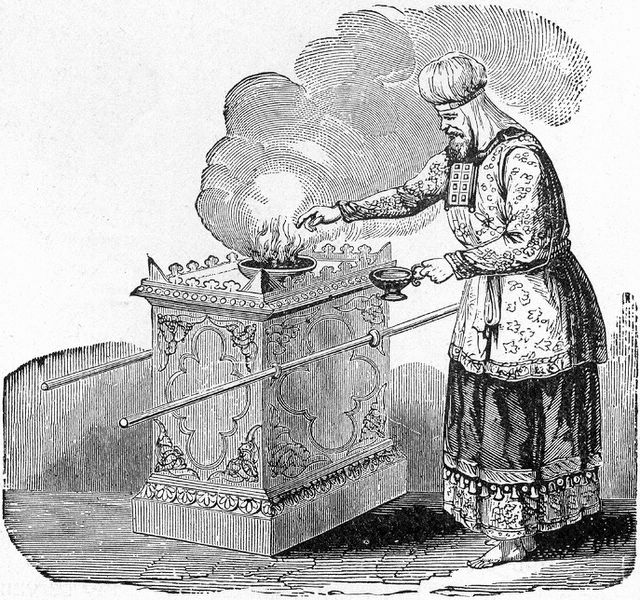
The reputation of the Book of Leviticus, which we begin to read this Shabbat, has suffered from ups and downs in the public eye. In traditional Judaism it was considered so important that the education of little children began with the study of Leviticus. “Let those who are pure come and study the laws of purity” was the common saying. In the nineteenth century, however, Leviticus was severely criticized by non-Jewish Biblical critics, who considered it to be a primitive book, concerned only with dry ritual, far from the high ideals of the prophets.
Fortunately the reputation of Leviticus has recently been restored by the work of two outstanding individuals: Rabbi Jacob Milgrom and the late Prof. Mary Douglas.. Rabbi Milgrom has written a magnificent commentary that has revealed the religious concepts that underlie the book. Prof. Douglas, a devout English Christian anthropologist, viewed the book from a unique perspective. In Leviticus As Literature she explained the purpose of Leviticus as follows:
“Read in the perspective of anthropology the food laws of Moses are not expressions of squeamishness about dirty animals and invasive insects. The purity rules for sex and leprosy are not examples of priestly prurience. The religion of Leviticus turns out to be not very different from that of the prophets which demanded humble and contrite hearts, or from the psalmists’ love of God….The more closely the text is studied, the more clearly Leviticus reveals itself as a modern religion, legislating for justice between persons and persons, between God and His people, and between people and animals.” (Pages 1-2)
We often distinguish Messianic Jewish theology from historic Christian theology by emphasizing our approach to the Torah. But as I read through Leviticus, I wonder if we Messianic Jews don't also struggle to discern the relevance of the forms of worship described in this central book of the Torah. I wonder if what makes it seem dry to us isn't a nagging feeling that these rituals depend on a metaphysics that is strikingly different from our own? The idea of God being worshipped through animal sacrifice is itself a difficult one which Jewish thinkers have been wrestling with since the medieval period.

This is a particularly timely study since we've reached Leviticus in the Torah cycle and we're drawing near to Passover. I hope to review further insights derived from Derek's book in the weeks to come. If you want to join me in learning about these topics, you can order a copy of Yeshua Our Atonement here.
'via Blog this'
Sunday, March 10, 2013
Leviticus! the game?
 |
| (Godcast, via Tablet) |
As the game begins, cartoon animals go flying in the air, and players must slash their throats by swiping a finger across the screen. Like many similar video games designed for the iPhone and the iPad—most notably the ubiquitous Fruit Ninja—this new game, too, is fast, fun, and unremitting: one misguided touch and it’s all over. But play for a moment or two, and you realize that the game’s rules—blemished animals must be spared, doves must be sacrificed by the pair—were set in place by the grandest designer of them all: The game you’re playing is based on the Bible’s most intricately detailed book.
Titled Leviticus!, the game, as its title suggests, is both irreverent and deeply faithful to the source text—all that business about doves and cows and purity is right there in the book. But whereas Leviticus is too thick with rules to make for a very compelling read, it’s perfect when played.
The game's author explains:
“The whole book is a series of rules,” she said. “It’s all about how the priest should do this but shouldn’t do that, and if he did something a certain way, something will happen, and if he didn’t, it won’t. It’s just a bunch of rules with rewards and punishment, and that’s what games are.”Interesting. The following comment about trivial personal choices and identity is also interesting:
When players of Leviticus! learn, for example, that swiping at that pig casually making its way across the screen means an automatic game over, this question of belonging arises in full force: Nothing delineates the boundaries of identity more sharply than being forced to make rapid, personal choices, even seemingly trivial and symbolic ones like whether or not to sacrifice a virtual pig in a video game. Put simply, to keep the game going, the player chooses not to touch that pig, and, by doing so, recalls that we’re the people who find pigs impure. This is how ritual works; it’s also the fundamental structure of good education.So...is this a brilliant way to help kids (and adults) learn the laws of Leviticus Torah? Sacrilege? Ethically troubling? (What if kids start imitating the behaviors in the game?) Regardless, it sure gives new meaning to the term 'angry birds'...
'via Blog this'
Wednesday, February 27, 2013
How to sing the havdalah blessings
In case you haven't learned it and would like to (or have friends that would), here is a video of the popular havdalah blessings song by Debbie Friedman.
Thursday, February 21, 2013
A new book on Paul and the Torah
No, I'm not talking about Introduction to Messianic Judaism (though if you haven't gotten your copy, you should get one!). I'm talking about James Thompson's Moral Formation according to Paul. Another point to Dr. Scot McKnight (who's gotten a lot of play on this blog recently) for bringing this to our attention at A Question for the Apostle Paul:


“How should we live?” That’s the question so many today want to ask Paul — and about as many answers as the numbers of those who ask him the question! There are tensions when one asks this question of Paul — he was after a Jew and a Jew would say “Obey the commands.” But many think that’s not what Paul would say. This question has been posed in a remarkably sensitive manner by James Thompson, at Abilene Christian University, in a book called Moral Formation according to Paul.
...
Thompson knows that many today — Christian theologians in particular — don’t want Paul to be offering a Torah-shaped set of ethics. So there are a number of approaches to Paul’s sources:1. Some see his sources in typical Greek and Roman (and Jewish) moral traditions. That is, folks like Dio Chrysostom or Plutarch or Musonius.
2. Some think Paul’s ethic is absolutely reduced and emerged from the command to love. Bultmann. Or Freedom. Strecker. Even in a situational framework. Robin Scroggs.
3. Yet others think it is all about guidance and discernment of life in the Spirit. Here he appeals to Udo Schnelle and Jimmy Dunn.
4. Some think what Paul wanted was for people to do what he did: imitate Christ.
5. Last he looks at Richard Hays’ proposal of three focal images: cross, community and new creation.
Thompson thinks each falls short and that there is no going forward until one understands the central place the Torah played in Hellenistic Judaism — Paul’s concerns, after all, are with Gentile converts to the gospel in the Diaspora. And in that location the Torah was very, very important, even if it wasn’t halakic and even if it didn’t often sound like the rabbis were to sound.
Wednesday, February 13, 2013
Scot McKnight says calling people Pharisees gets close to anti-Semitism
From Pharisees: Revisiting an Old Problem:
Good on you, Dr. McKnight!It is a standard procedure to say “Pharisee” and mean “legalist, bigot, hypocrite, or picayune meddler into other people’s religious business.” Look at any dictionary. But this is in and of itself a caricature and stereotype, for no one (I hope) would think that all Pharisees have always been religious bigots. Such language spells danger down the road in ways that might surprise us. Even more, we have tended to download anger or extreme disagreement with others onto this term “Pharisee.” So, when I call someone a Pharisee I do not mean anything nice or even charitable. Which, in and of itself is dangerous because no group (well, there are exceptions) is always wrong and always bad.
Martin Luther — and this was all charted out in 1977 in EP Sanders’ Paul and Palestinian Judaism – tended to equate the Roman Catholic establishment with the Pharisees of the Gospels. Everyone should read this book, regardless of all the scuttlebutt about his ideas ever since. The invective of Luther against the Roman Catholics in the 16th Century then was downloaded onto the Pharisees of the New Testament.
Here’s the problem: the impact of our use of Pharisee is that we have learned to call all Jews and anyone we think is too conservative a “Pharisee.” This can get very close and often actually is anti-Semitism.
Subscribe to:
Posts (Atom)

