
from The Jewish Gospels, pp. 132-3

Isn't she beautiful?
There she is....there she is...
There she is...there she is...
Mama is everywhere---
He must have loved her so much.
 George's response is slightly cold: "Is she really in all those places, Marie?"
I am the Lord, and I will bring you out from under the burdens of the Egyptians, and I will deliver you from their bondage, and I will redeem you with an outstretched arm, and with great judgments; and I will take you to me for a people, and I will be to you a God . . .After these four promises from God comes a fifth:
(Exodus 6:6–7a)
. . . and I will bring you in unto the land concerning which I lifted up My hand to give it to Abraham, to Isaac, and to Jacob.What is it that bridges God’s four-fold redemption of the Israelites from slavery in Egypt to God’s bringing the Israelites into the land? The answer is given in the intervening verse:
(Exodus 6:8)
…and you shall know that I am the Lord your God, who brought you out from under the burdens of the Egyptians.This emphasis on da‘at, knowledge of God, is characteristic of the first half of Exodus, in which Israel comes to know God through his miraculous deliverance. In particular, this verse highlights that Israel’s future entrance into the land must be preceded by their coming to know that the Lord is God.
(Exodus 6:7b, emphasis mine)
These verses cite five expressions of redemption. The first four relate to the Egyptian exile and the three exiles following thereafter, including the present one. The fifth—“I shall bring you . . .”—relates to an additional level of ascent that will follow the initial redemption by Moshiach.If the fifth message of redemption (“I shall bring you into the land . . .”) is a reference to the Messianic redemption, then it follows that entrance into the Messianic Age must be preceded by Israel coming to know God in the fullest sense. Of this Jeremiah writes, “no man shall teach his neighbor . . . for they all will know me” (Jeremiah 31:34).
(Living With Moshiach, p. 51)
 Over at Messianic Jewish Musings, Derek Leman announces his new book, "Yeshua in Context," which will be coming out next month (followed by several other high-quality Messianic resources on Yeshua in the fall). Here's the table of contents:
The Table of Contents for Yeshua in ContextTo get on the pre-order list, email Derek at derek4messiah@gmail.com. (I already have!)
Ch 1 The Real Yeshua, Mark 1:1-20
Ch 2 The Unexpected Yeshua, Luke 4:14-30
Ch 3 The Heralding Yeshua, Mark 1:16-45
Ch 4 Yeshua as Exorcist, Mark 1:23-28; Luke 11:19-20; 13:32
Ch 5 Yeshua as Healer, Mark 5:21-43; Luke 7:22; 10:18
Ch 6 The Messianic Secret, Mark 8:22-35
Ch 7 The Temple Cleansing, John 2:13-22
Ch 8 The Handwashing Dispute, Mark 7:1-23
Ch 9 The Prodigal Story, Luke 15:11-32
Ch 10 Beatitudes of Hope, Matthew 5:1-12
Ch 11 Seeds and Fruit, Mark 4:1-20
Ch 12 The Wicked Tenants, Mark 12:1-12
Ch 13 Born from Above, John 3:1-21
Ch 14 Messiah’s Trial, Mark 14:53-65
Ch 15 Yeshua in Death, Mark 15:21-39
Ch 16 The Living and Present Lord, Luke 24:36-53
Ch 17 The True Vine, John 15:1-27
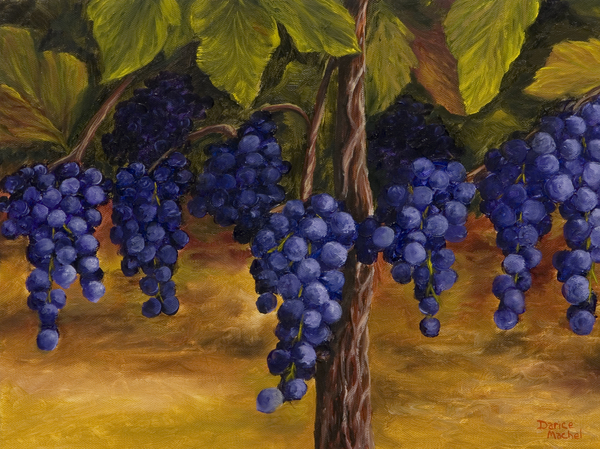 In scripture, the vineyard represents Israel (Isaiah 5:17, Mark 12:1–12). But in John 15:1–17, Yeshua seems to employ the vine image differently. We glean more insight from a parable of Ezekiel:
 A great eagle . . .came to . . . a cedar [of Lebanon], . . . broke off its topmost shoot and carried it away . . . He planted it like a willow by abundant water, and it sprouted and became a low, spreading vine. (Ezekiel 17:3-6, excerpted.)The parable goes on to pronounce judgment on the vine–that is, the king of Judah–for breaking the covenant. Then the Lord declares:
I myself will take a shoot from the very top of a cedar and plant it; I will break off a tender sprig from its topmost shoots and plant it on a high and lofty mountain. On the mountain heights of Israel I will plant it; it will produce branches and bear fruit and become a splendid cedar. (17:22–23.)Christopher M. Tuckett observes: “The context of Ezekiel 17 is itself all but explicitly ‘messianic’ in that it refers to the promised restoration of the Davidic monarchy in the form of king Jehoiachin” (“The Parable of the Mustard Seed and the Book of Ezekiel,” The Book of Ezekiel and Its Influence, p. 97). Thus, Yeshua’s claim “I am the true vine,” read together with Ezekiel 17, assumes messianic overtones, which are only heightened when we recognize that the vine of Ezekiel’s parable started out as a branch.
Gershom Scholem defines the innovation of eighteenth-century Hasidism whereby the mystic–who is turned inward and away from society–becomes at the same time the center of a community.Likewise, Yeshua established himself as the center of his community and the source of its life and love. Paul Philip Levertoff calls this love “the realization of the highest ideal of Chasidism–i.e., achdut ‘unity,’ . . . a closeness of union approaching to identity (Acts 4:32).”
Return to us, O God Almighty! Look down from heaven and see! Watch over this vine, the root your right hand has planted, the branch/son you have raised up for yourself. Your vine is cut down; it is burned with fire; at your rebuke your people perish. Let your hand rest on the man at your right hand, the son of man you have raised up for yourself. Then we will not turn away from you; revive us, and we will call on your name. Restore us, O LORD God Almighty; make your face shine upon us, that we may be saved.
 ...from Orthodox Jewish theologian Michael Wyschogrod (someone all Messianic Jews owe it to themselves to be familiar with). He writes:
Israel...should declare itself a constitutional monarchy ruled by a successor to King David, represented by a “regent safeguarding the Throne of David until such time that divine intervention identifies the rightful heir to the Davidic kingdom.”Thoughts?
 This week's haftorah is from Isaiah 66 due to Rosh Chodesh--the new moon. Here's an excerpt from torah.org:
[...] a greater dimension of Rosh Chodesh was intended to be and will eventually become a reality. The Tur in Orach Chaim (417) quotes the Pirkei D'R'Eliezer which reveals that Rosh Chodesh was actually intended to be a full scale Yom Tov [i.e. holiday]. The Tur quotes his brother R' Yehuda who explains that the three Yomim Tovim correspond to our three patriarchs and that the twelve days of Rosh Chodesh were intended to correspond to the twelve tribes. This link reveals that each Rosh Chodesh truly has a unique aspect to itself and that one of the Biblical tribes' remarkable qualities is available to us each month. However, as the Tur explains, due to an unfortunate error of the Jewish people this opportunity has been, to a large degree, withheld from us.*Copyright (c) 2010 by Rabbi Dovid Siegel and Torah.org. The author is Rosh Kollel of Kollel Toras Chaim of Kiryat Sefer, Israel.
But in the era of Mashiach this error will be rectified and the experience of Rosh Chodesh will actually reach its intended capacity. Yeshaya reflects upon this and says at the close of our haftorah, "And it will be that from month to month. . . . all will come and prostrate themselves before Hashem." (66: 23) The Psikta Rabbsi (1:3) explains that in the days of Mashiach we will have the privilege of uniting with Hashem every Rosh Chodesh. All Jewish people will come to the Bais Hamikdash each month and experience His Divine Presence. During the illustrious era of Mashiach sin will no longer exist and Rosh Chodesh will be viewed exclusively as an opportunity for elevation. Each month will provide us its respective quality and opportunity which we will celebrate through the Rosh Chodesh festivities. The sacrifice of Rosh Chodesh will reflect our great joy over being with Hashem and will no longer contain any aspect of remorse or sin. In those days, the experience of His Di vine Presence in the Bais Hamikdash will be perpetuated throughout the month and the entire period will become one uplifting experience.*


