Showing posts with label Christianity. Show all posts

Monday, July 29, 2013

Messianic Jews in New York Times, Christianity Today

Messianic Jews were mentioned in several major media outlets in the past week.

New York Times

From the New York Times article One App, More Than 400 Languages, on the runaway success of YouVersion's Bible app:
Today, the app contains everything from the New International Version to “The Message,” an ultramodern interpretation that reads like a juicy novel. It also includes the so-called Orthodox Jewish Bible, which was actually developed for a religious sect known as Messianic Jews, who believe that Jesus is the Messiah that the Jews await.
Photo credit: New York Times.
From the caption for the above image: "the Orthodox Jewish Bible...created by the Artists for Israel International Messianic Bible Society...incorporates Yiddish and Hasidic cultural expressions into an English translation of both the Old and New Testaments."

The Orthodox Jewish Bible is certainly among the Messianic movement's more idiosyncratic translations (which is saying a lot). This fit right into the article's emphasis on the wide range of different Bible translations available through YouVersion. That said, the two other major Messianic Jewish translations, the Complete Jewish Bible and the Tree of Life version, are also available through YouVersion.

Christianity Today


Christianity Today's recent issue on Leviticus mentions Messianic Jews in two of its cover stories. In Learning to Love Leviticus, Christopher J. H. Wright explains how Christians can treat biblical "as a paradigm or model for our personal and social ethics in all kinds of areas: economic, familial, political, judicial, sexual, and so on"...without "upholding all the jots and tittles." In a paragraph on the food laws, he writes:
The distinction between clean and unclean animals and foods was symbolic of the distinction between Israel as God's holy people and the Gentile nations (Lev. 20:25–26). In the New Testament, that separation is abolished in Christ, as Paul says in Ephesians 2. Through the Cross, God has made the two cultures one new humanity. And as Peter discovered through his vision in Acts 10, before going to the home of the Gentile Cornelius, what God has called clean should no longer be called unclean. Today some Messianic Jewish believers choose freely to observe the kashrut regulations as a mark of their Jewish community and cultural identity. But in their unity, believers are free from food laws.
Kudos to Wright for not ignoring the existence of Messianic Jews in the body of Messiah who observe the kashrut regulations of Leviticus. That being said, I found his claim confusing. Are the kashrut restrictions truly disruptive to unity? (In most Messianic Jewish synagogues I've visited, Jews and Gentiles experience free fellowship over kosher meals.) Furthermore, in conflicts over food between "stronger" and "weaker" brethren, didn't Paul instruct the strong to compromise for the sake of the weak? (This particular line of argumentation assumes that Messianic Jews observing kashrut would be identified with the weak. I myself don't necessarily read the passage that way, but perhaps Wright or those who agree with him do.)

The argument against the food laws from unity strikes me as rather weak on its own. In fact, I suspect that other theological convictions (such as the abrogation of the law in Christ or the supposed dangers of law observance) are really behind this argument, lending it support in the minds of those who accept it. Perhaps as post-supersessionist interpretation of the New Testament gains traction among contemporary scholars, Wright will find this reading of Acts 10 (and other related passages) challenged.

~

Readers who found Wright's comments on Messianic Jews rather uninformed may find much more to appreciate in Philip Cary's Gentiles in the Hands of a Genocidal God. Cary's thesis is that reawakening an awareness of the theological and historical significance of Gentile identity can significantly transform Christian perspectives on the Old Testament's troubling genocide passages. Christians tend to identify too much with Israel, Cary contends, to the point where they forget their place in the narrative. "We have been reading Israel's Scriptures so long that we forget that these words were not originally addressed to us.":
In fact, with respect to the command to exterminate the Canaanites, our position is less like Israel's and more like that of Rahab, the Canaanite prostitute in Jericho who befriends the Israelite spies. She has not taken part in Israel's exodus, but she has heard of it and believes it. She knows the name of the Lord, the God who has given the land to Israel, and she confesses that he is God of heaven and earth (Josh. 2:9–11). She is a believer, and eventually will be included in Hebrews 11's great litany of heroes who lived by faith. But she is not an Israelite. She is a Canaanite who hopes to live, not die. 
As a believer, Rahab can have hope, because the threat she faces is not so much moral as religious. It is not as if the Israelites were so much more righteous than every other nation (Deut. 9:4–6). Israel is holy not because of their own righteousness but because the Lord loves them and chose them as his people. And the holiness of the Lord is a kind of jealousy that claims Israel as his own, not allowing other nations to lead them into worshiping false gods (7:5–8). That is the holiness that leads to herem, the extermination of Rahab's people for their idolatry. 
My proposal is that to read this story properly, as Gentiles, is to put ourselves in Rahab's place. Our origin lies not with the people who hear the command to kill, but with those who are to be killed. We belong with those who should be devoted to destruction because we offend against the holiness of God. And yet what has actually happened is that, like Rahab, we have received mercy through faith in the God of Israel. 
To read the Canaanite genocide this way is to have our hearts formed the way the New Testament intends for Gentiles. 
I'm sure I wasn't the only one shocked to find this in Christianity Today. (For anyone troubled by the "fire and brimstone" tone of the above passage, make sure to read the whole article; Cary also discusses the beautiful consequences of identifying with Rahab, i.e. "You could say that what frees Rahab from herem is hesed, the lovingkindness of her relationship with Israel.")

Before concluding the article, Cary discusses to the historical relationship between Gentile Christians and Israel:
"In you all the families of the earth shall be blessed" (Gen. 12:3, esv)...Christ himself fulfills these words, making the blessing of Abraham into a blessing for all who believe. 
Because of this gospel blessing, we can hear "I am the Lord your God" as words addressed to us, since we too share the faith of Abraham. But notice what this commits us to. It means we Gentile believers in Christ are to be a blessing to the people of Israel, "that by the mercy shown to you they also may now receive mercy," as Paul says (Rom. 11:31, esv). 
Alas, what sort of blessing have Gentile Christians been to Israel? So much persecution of the Jews fills our history. Even our evangelism has often meant attempting to put an end to them. As Messianic Jews have recently pointed out, that is what Christians did by demanding that Jews who accept Christ must cease to practice Judaism—in effect ceasing to be Jews. It meant turning them away from their covenant with the God of Abraham and Moses, as if we had forgotten that this was none other than the God and Father of our Lord Jesus Christ.
Here Cary demonstrates familiarity with the central claims in Messianic Jewish thought--the unity of Jewish identity and Jewish practice, the validity of "Judaism," the deep flaws in the historic Christiant "gospel" of "Jesus, not Judaism." (Readers who find merit in Cary's insights here may want to check out his Jonah commentary before Yom Kippur.)

~

One other article in CT which may be of interest to Messianic readers is Daniel Harrell's account of The 30-day Leviticus Challenge his church did. I was half-expecting a conclusion like this: "After a whole month of these tedious and difficult laws, we were all more grateful for God's grace which sets us free from the law." Sure enough, Harrell set up a conclusion remarkably similar to this...and then elegantly debunked it:
But if reading Leviticus only succeeds in making you feel bad for being a lousy Christian, you've missed its point. Leviticus isn't in the Bible merely to show you your need for grace. It's in the Bible to show you what grace is for. The ancient Israelites were already chosen people before God gave them the Law. The Law's purpose was never to save anybody. Rather, its purpose was to show saved people how to live a saved life.
Reading on, I was also impressed by the transformations Harrell described in the lives of the Challenge participants: continued Sabbath practice, the conclusion that confession of sin is the "modern, post-Jesus equivalent" of sacrifices, and a congregational "Day of Atonement" (during Lent), of which he wrote:
Many left with similar feelings of walking on air—as well as intentions to be more grounded in God—which is precisely what grace (and the Law) are supposed to do. I couldn't help but wonder why we tend to view obedience as so burdensome. Could it be that we've never really obeyed?
Sounds like a pretty decent Day of Atonement to me.

HT Glenn for the tip about the Cary article.


Wednesday, February 13, 2013

Scot McKnight says calling people Pharisees gets close to anti-Semitism

From Pharisees: Revisiting an Old Problem:
It is a standard procedure to say “Pharisee” and mean “legalist, bigot, hypocrite, or picayune meddler into other people’s religious business.” Look at any dictionary. But this is in and of itself a caricature and stereotype, for no one (I hope) would think that all Pharisees have always been religious bigots. Such language spells danger down the road in ways that might surprise us. Even more, we have tended to download anger or extreme disagreement with others onto this term “Pharisee.” So, when I call someone a Pharisee I do not mean anything nice or even charitable. Which, in and of itself is dangerous because no group (well, there are exceptions) is always wrong and always bad.

Martin Luther — and this was all charted out in 1977 in EP Sanders’ Paul and Palestinian Judaism – tended to equate the Roman Catholic establishment with the Pharisees of the Gospels. Everyone should read this book, regardless of all the scuttlebutt about his ideas ever since. The invective of Luther against the Roman Catholics in the 16th Century then was downloaded onto the Pharisees of the New Testament.

Here’s the problem: the impact of our use of Pharisee is that we have learned to call all Jews and anyone we think is too conservative a “Pharisee.” This can get very close and often actually is anti-Semitism.
Good on you, Dr. McKnight!

Tuesday, February 28, 2012

Thoughts on Messiah Journal #109

Below are some thoughts on the most recent issue of Messiah Journal.

(Full disclosure:my own book review of the Jewish Annotated New Testament is published at the end of this issue.  I did receive a free copy of the journal.)
  • Tzvi Sadan's article ("Halachic Authority in the Life of the Messianic Community"): I was glad to get to read this and glad that it's been put into print, since it articulates a number of important arguments in a succinct and eloquent way.  That said, in his treatment of Matthew 16, I was a little surprised that he failed to directly address verse 12 (unless I missed it)--in which it says that Yeshua "was not telling them to guard against the yeast used in bread, but against the teaching of the Pharisees and Sadducees."  I take it that Sadan reads this verse through the lens of Matt 23:1-2 and Luke 12:1, but I think it only weakens his argument for him not to state this explicitly.  (And even stated clearly, I think this is the one of the weak points in his argument...and this is coming from someone who shares Sadan's convictions in this area.)
  • James Pyle's article ("Origins of Supercessionism in the Church") provides a helpful overview of supersessionism in Christian history.  I'm looking forward to his followup article on supersessionism today.
  • Update (forgot to include this in my initial post): I enjoyed Rabbi Russ Resnik's initial article in a series he will be doing on "Living the Greatest Commandment" (the Shema) and very much look forward to further entries.  I'm particularly interested in seeing what Rabbi Russ brings out get integrated into our communal understanding, practice, and articulation of the Shema, including in public worship.
  • Toby Janicki's article ("A Gentile Believer's Obligation to the Torah") has been a long time coming.  I've thought a number of times that the current discussion about Acts 15 is too reductionistic on the Gentile side of the equation--the "four prohibitions" of the Apostles aren't just four singular practices.  Rarely does anyone actually map the prohibitions onto the teachings of Paul or the other apostles, and I've longed for an ordered exploration of this topic.  Not only is Toby's article a great contribution towards that effort, but he also includes helpful forways into later Jewish and Christian interpretation on the issues.  A couple observations:
    • I had never heard anyone propose the interpretation Toby proposes for Paul's perplexing reference to "baptisms for the dead" in 1 Cor 15:29.
    • I also appreciated his take on Paul's reference to "the cup of blessing" in 1 Cor 10:16.   
    • Another great scholarly take on the ritual demands of Paul's gospel to the Gentiles with respect to the Temple is Paula Frederksen's article Paula Frederiksen "Judaizing the Nations: the Ritual Demands of Paul's Gospel". 
    • I also am intrigued by his proposal that Gentiles are enjoined to keep the "remember" portion of the Shabbat commandment (with respect to creation) but not the "guard" portion which relates to the exodus from Egypt.
    • I do wonder about some of Toby's "these would only make sense if..." arguments, where he suggests that early Messianics must have been familiar with certain practices (such as benching), otherwise Paul's statement would make no sense.   Clearly, the Lord's Supper (even at it is practiced today) has its roots in mealtime blessings, but does the fact that few Christians today bench after meals prevent them from understanding Paul's reference to "the cup of blessing that we bless"?  So even though I wonder about the degree of adaptation that had already happened, I'm not at all threatened by the idea or by Gentiles recontextualizing the "cup of blessing" to reclaim .
  • Aaron Eby's article ("The Writing on the Wall") is the second in a series on the destruction of the Temple; this time he surveys rabbinic responses to the Temple's descruction.  This series has been helpful for me in relation to discussions I've been having about the NT's theological evaluation of the Temple.
  • The Levertoff excerpts are really great.  Keep 'em coming, FFOZ!
  • The book reviews section includes two great book reviews from Jacob Fronczak (Scot McKnight's The King Jesus Gospel and David Rudolph's A Jew to the Jews).  The latter is rather expensive ($88.15 on Amazon.com), so Fronczak's review gives readers with a more limited budget an idea of what Rudolph covers in exquisite detail.  Also, Jacob's voice is relatively new to me (I discovered his blog, Hope Abbey, last summer), but I immediately welcomed his insightful contributions to the Messianic conversation.
  • Last and least, my first contribution to Messiah Journal, a review of the Jewish Annotated New Testament.  I'll leave it to others to comment.  :-)

Sunday, February 26, 2012

Jewish-Christian relations, 1800's style

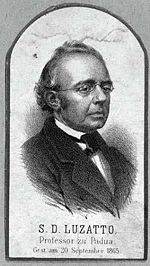
Over at the On the Main Line blog, Mississippi Fred MacDowell has an fascinating post on relationships between religious Jewish scholars and philo-Semitic Christian scholars in the mid-1800's, including excerpts from correspondence between Franz Delitzsch and Jewish scholar Samuel David Luzzatto.

Check out Why did Seligmann Baer prepare an edition of the Bible with Franz Delitzsch?

Thursday, February 11, 2010

Jewish Bloggers Discuss Augustine

Last fall I read Paula Frederiksen's book Augustine and the Jews. One of the reasons Augustine stands out in early church history is because we have so much of his writing, much of which was highly introspective. Because of this, we can actually trace the development of Augustine's thinking on a particular subject over the course of his life. In Augustine and the Jews, Paula Frederiksen does just that, as she attempts to show that Augustine developed an innovative Christian theology of the Jewish people which, though it would certainly be judged anti-Semitic by today's standards, was actually far better than the existing theologies of the Jewish people (developed by John Chrysostom, for example).

I really enjoyed Frederiksen's book; her close reading of Augustine really opened up the exciting possibilities in studying primary sources from the early church period for me.

So I was interested to discover that several of my favorite Jewish bloggers were talking about Augustine and Frederiksen's book. Here are a few quotes:

From Kvetching Editor:
Should Jews thank the church?

. . . Augustine's philosophy, although really, incredibly backhanded, was that Jews survive and should survive throughout all time until the End of Days in order that they serve as evidence to Christianity's truth. By Jewish survival, Jewish books survive, and, according to Augustine, it is Jews and their books that provide a walking, talking, breathing witness to the truth of Christianity -- that the church fathers didn't just "make it up." Jews and Judaism were not a challenge to Christianity, insisted Augustine, but a witness to it!

. . . Is it Augustine's (REALLY BACKHANDED) doctrine that has allowed the world to not completely destroy Jews and Judaism?
From Dovbear:
John Chrysostom, was from the "kill them all "school. During his remarkable career as a preacher of violence against the Jews, he put it this way: "When animals are unfit for work they are marked for slaughter, and this is the very thing which the Jews have experienced. By making themselves unfit for work, they have become ready for slaughter."

Augustine, disagreed, and lucky for us, his view won the day. Basing himself on a proof-text found in Psalm 59.11, he argued that the Jews should be kept alive, in a demoralized and decrepit state, to serve as proof that God had rejected them. His model was Cain, a type for the Jews, who had murdered Able, a type for Jesus, and was likewise made into a despised wanderer as punishment.
Check out the full discussions!