Showing posts with label halakha. Show all posts

Tuesday, April 10, 2012

Quote of the Day: "decent behavior precedes Torah"

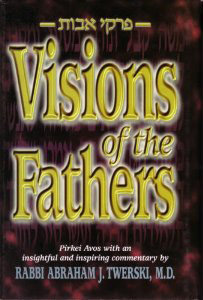
"It is a mistake to think that halachah is limited to certain religious rituals, or even to the manifest mitzvos, e.g. Shabbos, kashrus, etc. How we behave in our daily activities and interact with other people is also a matter of halachah. Indeed, proper conduct is a prerequisite for Torah observance, as the Midrash says, "Derech eretz kadmah laTorah," decent behavior precedes Torah (Vayikra Rabbah 9:3). The guides to this aspect of halakhah can be found in Ethics of the Fathers.

Rabbi Abraham J. Twerski, Visions of the Fathers, p. 3

Monday, April 11, 2011

Reminder: Donate your Chametz!

"The Mitzva to destroy Chametz can be fulfilled with a bare minimum of Chametz; preferably with leftovers that nobody would be able to use. Usable Chametz can be donated to various charity organizations which will distribute it to the needy."

HT: Danny Schoemann, "Halocho a Day"

Sunday, April 10, 2011

What's an eruv?

Sitting around the Erev Shabbat table with some friends recently, my wife observed the connection between the mitzvah to observe the Sabbath and the deliverance from Egypt.  Specifically, she noticed the following line in the Erev Shabbat kiddush:
כי הוא יום תחילה למקראי קודש, זכר ליציאת מצרים.
For this [Shabbat] is the foremost of the holy days,
a remembrance of the exodus from Egypt.
(Az Yashir Moshe: A Book of Songs and Blessings)
We started talking about the connection between deliverance from slavery and the institution of a day of rest.  Then one friend raised a good question: when God first commanded Israel to observe the Shabbat, how did they know what the word Shabbat meant (and consequently how to keep it)?

Someone pointed out that the Torah actually does give details to the Israelites about what it means to observe the Shabbat: things like not doing any melakha (Exodus 31:12-17), not kindling fires (Exodus 35:3), and not leaving your place (Exodus 16:29).  That last command ("Remain each of you in his place; let no one go out of his place on the seventh day.") might be less familiar in our Messianic circles.  However, in Jewish tradition it became the foundation for the halakha of the eruv.  Historian David Rotenstein has the background:
Blues guitarist Buddy Guy frequently tells interviewers that when you stretch a string, you are stretching a life. When Orthodox Jews stretch a string to build an eruv, they are creating a community. Eruv is a Hebrew word and in English it means “to mingle.” An eruv is symbolic space created by Orthodox Jews to enable them to carry and push things on the Sabbath as they move around their neighborhoods and travel to and from synagogue. (Mapping MoCo's Jewish Courtyards -- the Eruvim (Updated)).
Also notable to Messianic Jews is the mention of this commandment in the Acts 1:12 reference to "a Sabbath day's journey."

For a more humorous take on the eruv (and a contemporary controversy over erecting one in West Hampton, Long Island), here's the Daily Show's hard-hitting investigative reporter Wyatt Cenac:

(HT: Rabbi Jason.)

While this video ends up being a commentary on the sad irony occurring when people from the same religion can't agree, it's even more ironic that the object of controversy is something which was originally intended to help promote community -- by creating a shared "place" where everyone can congregate.  To me, this is the real value of the eruv: it helps us to think more deeply about what it means to be in community and challenges us to observe the Shabbat in more holistic ways.

(Finally, for more on the connection between Yetziat Mitzrayim and Shabbat, check out Rabbi Joshua Flug's article in YUTorah's Pesach-to-Go 5771.)

Monday, November 29, 2010

What is the mitzvah of Chanukah?

Here's a quiz from Jewish Treats:
Art by Randi Waxman of http://www.randisart.com/.
If you think her work is as beautiful as I do,
please consider making a purchase!
(Prices very reasonable.)
What is the primary mitzvah of Chanukah?

a) Eating latkes (potato pancakes)
b) Giving Chanukah gifts or gelt (money)
c) Publicizing the miracle of the oil that lasted 8 days
d) Playing Dreidel
Get the answer here.

This Chanukah, remember the miracles God performed for our ancestors.  And don't forget to say the shehekiyanu prayer on the first night thanking God for bringing you to this season!

May your Chanukah be a time of personal rededication, joy, and light.

Sunday, June 20, 2010

A Father's Day Tribute

From Jewish Treats' "The Importance of Dad":
Two peas in a pod.  (Notice the matching fluorescent hats and clip-on sunglasses!)Where does a child learn to be a mentsch (a good person)? From his/her parents! Indeed, in the Talmud (Sukkot 56b) it even notes that a child repeats in the streets what he/she hears at home.

According to the sages of the Talmud, after circumcision and Pidyon Haben (redemption of the first born son), a father’s primary responsibilities are to teach the child Torah, to find him/her a spouse, and to teach the child a trade (Kiddushin 29a). At the bare minimum, his fatherly obligations mean making certain that the basic necessities of child-rearing are attended to (by a third party if necessary). But, the best child-rearing includes dad sharing his time, knowledge and wisdom, and truly leaving a lasting and meaningful impression on his children.
Growing up in a Messianic Jewish synagogue and attending a Messianic Jewish day school gave me a love of Torah--which my dad nurtured through regular conversations about life, God, and Torah (a practice we continue to this day). I remember many times hearing my dad exhort me to be a mensch.

My dad was also definitely involved in welcoming my wife Kristen into our family and encouraging me to pursue the wonderful eshes hayil I've been blessed to find.

Finally, my dad always encouraged me to surpass him in the trade I choose to practice. When I chose to get an engineering degree, he was behind me all the way.

As far as the Talmud is concerned, my dad fulfilled his responsibilities to me...in spades! And with the sages I heartily agree. Thanks, Dad.

Monday, May 10, 2010

"My kids"

So a certain Gathering Sparks reader (who may or may not be related to me) called me out for referring to "my kids" in my comment on Scot McKnight's blog. "Is there something you're not telling me?" she wrote.

So in the interest of full disclosure, I decided to write a tell-all blog post revealing the real truth about my "kids." When I came across this video, I knew that Bret and Jermaine from Flight of the Conchords put it better than I ever could:

powered by Splicd.com

So that's right, I don't have kids (yet). I do have a real wife though. (Promise!) What follows is my attempt to justify having "hypothetical" kids...

Having kids may seem pretty far off. Right now you're probably thinking more about finishing school, or figuring out your major, or finding a job--not to mention finding someone you'd actually want to have kids with!

The Torah commands us to "teach [God's commandments] diligently to our children" (Deut. 6:7). In fact, this command follows immediately after the command which Yeshua called "the greatest commandment"--to love God with all our heart, soul, and might. That means it must be pretty important, right?

Is there anything we who don't have kids yet can do about this commandment right now? A few ideas come to mind:
  • Invest in your own spiritual growth. (This will one day benefit your kids, since you will be one of their main teachers.)
  • Invest in your community. (You may end up raising your kids there!) If you want your kids to have a strong Jewish identity and strong faith in Yeshua, then having a strong community to reinforce both of those things is essential.
  • Help out with childcare in your community. (Something of a combination of #1 and #2...)
Can you think of other things to add to this list?

Monday, March 1, 2010

Should Messianic Jews "Keep the Law"?

Have you ever wrestled over the question of whether Messianic Jews should keep Torah or not?

Over the years, I certainly have. You can read about some of the things that influenced me changing my mind on the issue in the comments section of a recent post at the Rosh Pina Project blog.

Monday, February 15, 2010

Be Happy! Adar is here...

From Halocho A Day:
One increases joy when Adar begins because Adar and (next month) Nissan historically have been full of miracles, including the redemption from Egypt and (nearly a millennium later) the miracle of Purim.

Adar is considered an auspicious month for the Jews.

Source: Kitzur Shulchan Aruch 141:1

Thursday, December 24, 2009

How to honor your parents?

Daniel over at the Christian4Moses blog has an interesting post on the halakha of honoring your parents. As kibud av va em is another one of the positive mitzvot, it's definitely something worth thinking about, especially for those of us endeavoring to live faithfully to Torah.

What are the most important ways of honoring our parents?

Thursday, November 19, 2009

Being "Godly" 1

During my Days of Awe postings, I wrote about the 13 midot and what it means to be truly "Godly." There are several great passages from the rabbis on this in the daily prayers of the Siddur, and I want to share them with you.*
"To walk in all His ways" (Deuteronomy 11:22). These are the ways of the Holy One: "gracious and compassionate, patient, abounding in kindness and faithfulness, assuring love for a thousand generations, forgiving iniquity, transgression, and sin, and granting pardon. . . ." (Exodus 34:6). This means that just as God is gracious and compassionate, you too must be gracious and compassionate. "The Lord is faithful in all His ways and loving in all His deeds" (Psalm 145:17). As the Holy One is faithful, you too must be faithful. As the Holy One is loving, you too must be loving.
Sifre Deuteronomy, Ekev
Siddur Sim Shalom, p. 19
In a previous post we discussed the positive mitzvot. Interestingly, this verse in Deuteronomy is not correlated to any of the 248 positive commandments.** And yet the sages see in this verse an injunction to imitate God in His qualities.

To me this teaching is both inspiring and very challenging. Not only that, but I believe that for Messianic Jews, this teaching should be particularly emphasized as a fundamental feature of our community. In the coming weeks, I hope to continue posting on this topic and to present some reasons for why I think it's important.

What say you?

* Don't worry, I haven't forgotten about my follow-up post on the second soul of Shabbat--I decided to save it for tomorrow as it will be a good post leading into Shabbat for this week.

** At least, so far as I could find. If I'm wrong, help me out here!

Sunday, October 25, 2009

The Power of Positive Doing

There is a popular book from the 1950's called The Power of Positive Thinking. I've never read it, but since Sukkot ended I've been musing about something else: the power of positive doing.

Of the 613 mitzvot, Judaism recognizes 248 of them as positive commandments. That means that instead of starting with "Thou shalt not...", these mitzvot start with "Thou shalt..." and go on to tell you something to do.

Not all 248 mitzvot are for everyone. There are positive mitzvot for men and positive mitzvot for women, positive mitzvot for priests and positive mitzvot for kings. There are positive mitzvot for society as a whole, and there are positive mitzvot to be performed in each household.

Take Sukkot, for example. In the Torah, Jews are commanded to build a Sukkah and then to live in it for seven days. I'm sure I don't have to tell you that there's a big difference between reading or thinking about building a Sukkah and actually doing it. It takes planning, effort, and, not least,
a little help from your friends!

Sometimes we might be tempted to think that being faithful to God is simply about not doing certain things. But commandments like Sukkot teach us that just as often, being faithful to God means picking up a hammer and a nail and doing some work. "For we are God's workmanship, created in Messiah Yeshua for good works, which God prepared beforehand, that we should walk in them..." (Eph 2:10)
Judaism is unabashedly a religion of doing. Not doing in order to score points with God, but doing because G-d has covenanted with us to be His partners in making the world into the kind of place where He wants to live.

But the Torah teaches that changing the world doesn't start far off. No, "it is in your mouth and in your heart, that you may do it." (Deut. 30:14) Changing the world starts simply:
  • And with joyous celebrations like Sukkot.
So, friends, let's remember the power of positive doing. "Always give yourselves fully to the work of the Lord, because you know that your labor in the Lord is not in vain." (1 Cor. 15:58)

Now it's your turn to share. Here are some questions:
  • What positive commandments do you find particularly meaningful or important?
  • What positive commandments are you thinking about integrating into the practice of your faith this year?
  • Do you tend to be drawn to certain types of commandments as opposed to others? (For an interesting political take on this question, see this article by Jewish blogger DovBear.)
  • No one is perfect, but are there some mitzvot you have an especially hard time with?

Thursday, September 3, 2009

The Shofar 2, or 10 Reasons Why We Blow the Shofar

Why is this night different from all other nights? Why are we commanded to blow the shofar? Why do we eat kosher? Why, why, why?

If the Jewish tradition were like an annoying older brother, he would probably say "Sheket!"* to all your questions, and then go back to working on his blog whatever he was trying to say about how the spiral of the ram's horn resembles the intricacies of life's entanglements and blah blah blah blah bla...

Luckily for all of us, Jewish tradition isn't like a know-it-all older brother.

It's more like a zeyde...a twinkly-eyed Jewish family patriarch who loves to scoop you onto his lap and tell you stories about the time when Uncle Moshe led the entire family across the scalding hot sand, and how the manna tasted like borscht on Tuesdays and matzah brie every second Friday. Just like a zeyde, sometimes the tradition can tell stories that get kinda long, or go over your head, or even seem a bit gruff. But the older you get the more you realize that just as your bubbe or zeyde was an authentic link to the Jewish past, so the tradition is. And that without that link to the past, your Jewish present and future will be...well, let's just say more boring than a stage adaptation of Leviticus.

Jewish tradition is all about "Why?"

The midrash is all the "Why?"s asked by the great sages of Jewish history about the stories in the Torah. The Talmud is the "Why?s" asked by the sages about halakha (how we "walk out" the commandments in Torah). Why does the youngest child learn to sing "Ma Nishtana?" (the four questions) at the Passover seder? So she will be taught to ask "Why?"!

So why are you telling me this?

I'm glad you asked. On Rosh Hashanah we blow the shofar--great! But why? Why did God command us to blow the ram's horn on this day once a year?
The Saadia Gaon (9th century Jewish sage) suggested not just one, but 10 reasons. You could say that this is part of a long tradition of "top ten" lists that goes back to Moshe Rabbenu and the Ten Commandments. I was going to write out the list myself, but Derek Leman beat me to the punch.
So go ahead, check out Derek's article on the Saadia Gaon's ten reasons why we blow the shofar on Rosh Hashanah. Top that, Dave!

When you're finished, ask yourself:
  • Are the Saadia Gaon's reasons for blowing the shofar relevant to me today?
  • Which reason most resonates with me? What does that tell me about myself?
  • Which reason least resonates with me? Why? Does it point to an area in my beliefs where I could stand to learn more, or grow a bit?
  • How can I make sure to remember these reasons when we sound the shofar this Rosh Hashanah?

*Hebrew for "Quiet!"