
In case you haven't learned it and would like to (or have friends that would), here is a video of the popular havdalah blessings song by Debbie Friedman.
Showing posts with label music. Show all posts
Showing posts with label music. Show all posts
Wednesday, February 27, 2013
How to sing the havdalah blessings
In case you haven't learned it and would like to (or have friends that would), here is a video of the popular havdalah blessings song by Debbie Friedman.
Sunday, December 2, 2012
Article on r̶o̶c̶k̶e̶r̶ crooner Glen Campbell mentions Messianic Jews
From Glen Campbell has rock, religion on his mind | Reuters:
(HT Todd D.)Grammys in a cabinet? Check.
Movie theater? Check.
Jewish artifacts? Check.
Back up. The Baptist-raised country star, who says he once confused "menorah" with "manure," displays a Jewish candelabrum on the mantel, and a Hebrew book sits on the coffee table.
Adding to the cross-cultural confusion, the Rhinestone Cowboy soon breaks into a plaintive cry,
"Jeee-esus ... Help me find my special place." His German Shepherd joins in on the last bit.
It's not a hymn or a prayer. It's a line from an old song by the 1960s rock band the Velvet Underground. "Jesus" appears on the semi-retired singer's first album in 15 years for Capitol Records, the wryly titled "Meet Glen Campbell" (August 19), in which the 72-year-old singer covers tunes by the likes of U2, Green Day, John Lennon and the Foo Fighters.
Amid the jarring juxtapositions, Campbell reveals that he and his wife, Kim, attend the local synagogue every Saturday and celebrate Jewish holidays such as Passover, Rosh Hashanah and Hanukkah, as well as Christmas. Kim cooks a mean brisket but is still working on her matzo balls. And grape juice subs for Manischewitz in the alcohol-free household.
MESSIANIC JEWS
For two decades, the Campbells have been adherents of Messianic Judaism, a religious movement whose members regard themselves as committed Jews but are rejected by mainstream Jewish denominations as following an essentially evangelical Christian theology.
"It's Jews who believe that Christ is the risen savior," Campbell said. "I think it will all come around to that."
Tuesday, March 20, 2012
A Review of Tzvi Sadan's "The Concealed Light"
Standing with Marie looking up at the painting is her grandson, also named George. He too is an artist, but, unlike his namesake, this George is floundering, struggling to find an expression of his own.
Gazing up at the painting, Marie points to her mother and asks, "Did I ever tell you who that was?" George replies patiently, "That is your mother."
Almost as if without hearing him, Marie begins pointing at every other woman in the painting. As she does so, she sings:
Isn't she beautiful?
There she is....there she is...
There she is...there she is...
Mama is everywhere---
He must have loved her so much.
 George's response is slightly cold: "Is she really in all those places, Marie?"
In The Concealed Light: Names of Messiah in Jewish Sources, Tzvi Sadan shows us how Jewish commentators through the centuries have stood before the Scriptures and, in a way not unlike Marie before her father's famous painting, seen hints of Messiah in the most unlikely places. Sadan gives his readers glimpses---one hundred different tableaus, if you will---of what they saw, concise summaries organized according to different names assigned to Messiah from Scripture by later rabbinic commentators.
Some of the names Sadan brings out are familiar: Branch, David, Lion, Son of David, Son of Joseph. Others are obscure: Donkey, Adder. Still others are even more startling: Pierced, Son of God. All of the names hold profound resonance for those who cherish the Hebrew Scriptures and who are convinced that Yeshua of Nazareth is the Messiah of whom they speak.
The book is quite engaging on a first reading. In some cases, the connections are challenging to follow (Vav, Stone) because the original Jewish commentators hung their interpretations on the slightest details of the literal Hebrew wording or even lettering. However Dr. Sadan deftly navigates these passages, enabling readers of all levels to follow the interpretative leaps and bounds. And with each entry being only two pages long, the book is easily digested over numerous sittings. I anticipate returning to it regularly for devotional reading.
On a personal note: when I created this blog, I named it Gathering Sparks partially to represent the idea that I felt that there was much beauty, depth, and light in our Jewish traditions, and that it was our duty as Messianic Jews to gather, admire, and be enlightened by those "sparks." Dr. Sadan's book is a prototypical example of this kind of gathering effort, and I am deeply grateful to Vine of David for presenting it to us in such a beautiful form. However, it is not enough simply for Dr. Sadan to write it or Vine of David to publish it. In order for it to reach its full potential, we have to read it---and be nourished by its contents.
In Israel's Messiah and the People of God, Mark Kinzer makes a "radical and scandalous claim"---namely, "that Yeshua constitutes the true center of Jewish life." (p. 64) Dr. Kinzer is not the only Messianic Jew who has discovered this to be true. An ever-growing number of Jewish followers of Yeshua are encountering the Risen One, through the work of God's Spirit, within the pages of our Siddurs and the writings of our sages. The Concealed Light is a powerful witness to His presence within Judaism---for those who have eyes to see and ears to hear.
~
If what I've written at all intrigues you, inspires you, moves you, or reminds you of your own relationship with the Rabbi of rabbis, I exhort you: buy this book. Click here to view The Concealed Light for sale online through Vine of David. This review was written based on a advanced review copy I received.
Tuesday, November 22, 2011
Free Hanukkah Music Sampler from Craig Taubman

Last summer, Jewish musician Craig Taubman released a free high holiday music sampler.
Well, Craig's done it again: you can download Lights, Vol 2. A Hanukkah Sampler for free from Amazon.
Check it out!
Tuesday, August 30, 2011
Free High Holiday Music Sampler from Craig Taubman

Jewish musician Craig Taubman has made Jewels, A High Holiday Music Sampler, available for free on Amazon.com as part of his JewelsOfElul program. Check it out!
UPDATE: in order to get the songs for free, you need to buy them each individually. (If you buy the entire album with one-click, it will cost you $7.99.)
Monday, August 8, 2011
Artist spotlight: Leonardo Gonçalves
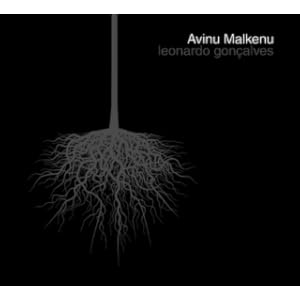 Just over six years ago (inspired either by the discovery of his own Jewish ancestry or perhaps that of a friend), Portuguese-speaking Brazilian gospel artist Leonardo Gonçalves embarked on a music project different from anything he had done before.
The result is Avinu Malkenu, a twelve-song album from Sony Music sung entirely in Hebrew. Some of these you will instantly recognize (Avinu Malkenu, Adon Olam, Yerushalayim Shel Zahav, L'cha Dodi, V'haer Enenu), while others are settings of beloved texts like Jeremiah 33:10-11 ("a song shall be heard in the cities of Judah..."), "L'shana ha'ba'ah b'Yerushalayim," and Yeshua's prayer (Avinu Shebashamayim).
I would venture to say that the quality of musicianship on this album is equal to anything I've heard, and Gonçalves's voice soars exultantly on top of it all. His arrangement of "L'cha Dodi," in particular, is my favorite I've heard.
Here is a live rendition of Gonçalves singing "Avinu Shebashamayim":
If you read Portuguese, you can glean some more background knowledge on Gonçalves from this interview at GospelPrime. You can also follow him on Twitter or talk to him directly there.
As for me, I'm hoping Stuart Dauermann can somehow get Gonçalves on Shalom Talk so we can hear a more extended interview (in English!). I'm especially interested in what what motivated Leonardo to do this project (which obviously took a lot of time an effort). In the above interview Gonçalves also reveals his hopes that the album will go beyond simply being a curiosity for Evangelical Christians, but perhaps even open the door for a possible "artistic-musical" dialogue between Jews and Christians. Sounds like Shalom Talk kind of material to me!
Regardless of Gonçalves's success in furthering artistic collaboration among people of faith, I'm hoping he finds another unexpected result--a warm ambrace of his music in the Messianic Jewish community.
Limited copies of Avinu Malkenu are available from Amazon.com, so get yours now!
Sunday, May 1, 2011
A song for Sefirah
I find this song by Ari Goldwag, based on a text from Eikha (Lamentations) particularly appropriate for this season of counting the omer.
From Ari Goldwag's website:
From Ari Goldwag's website:
07/26/2009 Years ago I composed a song whose words come out of the kinnos of Tisha B'av. They are עד אנה בכיה בציון ומספד בירושלים תרחם ציון ותבנה חומות ירושלים - How long will there be crying in Tzion and eulogy in Jerusalem? Have mercy on Tzion and rebuild the walls of Jerusalem. When I have had difficulty getting emotional on Tisha B'av, I will inevitably turn to these words and this song, and the tears come. I hope it will inspire you too. The song is A capella - there are no instruments, just voices.
Monday, November 22, 2010
Messianic Judaism in this month's Sh'ma
Have you heard of Sh'ma: A Journal of Jewish Responsibility? It's a great monthly publication featuring a variety of Jewish voices on one unified theme.

The theme of this month's edition of Sh'ma is sound in Jewish life, and it contains a casual mention of Messianic Judaism on the front page. From "Funny, You Don't Sound Jewish: Three Stories about Sound":
A few years ago, I was interviewing a Christian songwriter who told me that he had been commissioned to write a song for a Messianic Jewish congregation. He expressed curiosity as to why the congregation’s rabbi seemed to prefer songs in a minor key. I laughed and tried to explain how the terms “lament” and “mourning” (which, for the record, I don’t even believe to be inherent to Jewish prayer) have been woven throughout Jewish liturgy. A preference for the minor keys still seems synonymous with “Jewish music,” despite the fact that Jews have written songs as varied as “Take Me Out to the Ball Game,” “Bei Mir Bist Du Sheyn” and “I Wanna Rock and Roll All Night (and Party Every Day).”
The author goes on to say that what makes a song Jewish is not "a Jewish songwriter, [minor scales], a clarinet, or a fiddler. Nevertheless, there is something we can hear as Jewish music."
I think you readers who are involved in music in your communities will appreciate this article, as well as many others in this issue. I particularly liked the very first story in the article linked above, about speaking Hebrew in your own dialect rather than trying to sound like someone else. I have found Sh'ma to be a great read...and right now you can subscribe digitally for free. Have at it, spark gatherers!
Tuesday, November 9, 2010
What is Grassroots?
"Grassroots is not a conference."
That's just one of the catchphrases I heard two weekends ago at Congregation Sha'arei Shalom in North Carolina, where over80 100 (!) young Messianics gathered for a weekend of prayer, worship, fellowship, and discussion. It meant that Grassroots doesn't offer famous speakers, well-known musical artists, or an extensive schedule filled with breakout sessions or activities. But what Grassroots does offer is lots of space for relationship-building.
 How did Grassroots start? Sometime in the early/mid-2000's, four young Messianic believers met each other for the first time in Israel. Two grew up in one large Messianic Jewish organization, and two in another. After introducing themselves and beginning to talk, they quickly became astonished by how much they had in common. "How do I not know you?" they started asking.
 They realized that there was a whole parallel universe of fellow Messianic Jewish believers they didn't know, simply because they were part of a different organization. This realization helped plant the seed for Grassroots, a movement for unity among Messianic believers in the U.S. and abroad.
This year was thesixth fifth Grassroots (and the second one I've attended). Both years I heard the organizers tell everyone, "We honestly don't know what to expect"---while simultaneously encouraging everyone to be free and true to their identity in Messiah.
 Each Grassroots takes on a distinctive flavor from the community which hosts it. This year one young leader likened it to honey: did you know that one way to lessen your allergies is to have some of the local honey? That's because the pollen residuals in the honey can soften the affects of the allergies. Similarly, this young leader said, by being together and sharing the best of what we have to offer, we can lessen our "allergic reactions" to each other. This was followed by another buzzword for the weekend, "cross-pollination"---which, as you can imagine, sent giggles through the mostly under-30 audience (especially as it was followed by an unintentional reference to "the future of the Messianic movement").
 One thing that Grassroots does promote is honest dialogue. One year, a dozen or so people who grew up in the UMJC sat down with a dozen MJAA people and basically said, "Here's what we (learned to) think about you." The conversation led to a lot of repentance--changing minds and hearts about our fellow believers.
If you search for Grassroots online, you won't find a conference website or schedule. There's no invitation committee or outreach wing; information about it spreads through word of mouth. What makes Grassroots so disorganized ("We're not an organization!" was another catchphrase) is also what can make it spread. Grassroots is us. If you want to see unity happen among Messianics, then start making it happen. If there's another Messianic congregation in town, get together with them for Shabbat dinner and discussion or for prayer and worship. Invite each other to things. Think locally. As one of my favorite captains from childhood once said, "The power is yours!"
(Some "local honey" from the worship team at Sha'arei Shalom in NC.)
That's just one of the catchphrases I heard two weekends ago at Congregation Sha'arei Shalom in North Carolina, where over
 How did Grassroots start? Sometime in the early/mid-2000's, four young Messianic believers met each other for the first time in Israel. Two grew up in one large Messianic Jewish organization, and two in another. After introducing themselves and beginning to talk, they quickly became astonished by how much they had in common. "How do I not know you?" they started asking.
 They realized that there was a whole parallel universe of fellow Messianic Jewish believers they didn't know, simply because they were part of a different organization. This realization helped plant the seed for Grassroots, a movement for unity among Messianic believers in the U.S. and abroad.
This year was the
 Each Grassroots takes on a distinctive flavor from the community which hosts it. This year one young leader likened it to honey: did you know that one way to lessen your allergies is to have some of the local honey? That's because the pollen residuals in the honey can soften the affects of the allergies. Similarly, this young leader said, by being together and sharing the best of what we have to offer, we can lessen our "allergic reactions" to each other. This was followed by another buzzword for the weekend, "cross-pollination"---which, as you can imagine, sent giggles through the mostly under-30 audience (especially as it was followed by an unintentional reference to "the future of the Messianic movement").
If you search for Grassroots online, you won't find a conference website or schedule. There's no invitation committee or outreach wing; information about it spreads through word of mouth. What makes Grassroots so disorganized ("We're not an organization!" was another catchphrase) is also what can make it spread. Grassroots is us. If you want to see unity happen among Messianics, then start making it happen. If there's another Messianic congregation in town, get together with them for Shabbat dinner and discussion or for prayer and worship. Invite each other to things. Think locally. As one of my favorite captains from childhood once said, "The power is yours!"
(Some "local honey" from the worship team at Sha'arei Shalom in NC.)

Friday, July 9, 2010
Noa at the Sixth and I

In May, my wife and I got a chance to see internationally renowned Israeli singer Noa perform at the 6th and I historic synagogue in downtown DC. Noa is a consummate performer, and it was such a pleasure to watch her sing and (at various times) play guitar, piano, and percussion. She was accompanied, as always, by her long-time musical collaborator, Gil Dor. Also joining her on this tour was Palestinian-Israeli singer Mira Awad. If you enjoy beautiful music, Hebrew lyrics, or skillful voice and guitar work, you owe it to yourself to pick up one of Noa's albums. (I suggest starting with this one.)
A funny thing happened to us at the concert that I had to blog about. We had purchased VIP tickets: for a mere $10 more we got to meet Noa in person before the show and sit in the front VIP section! After meeting Noa (and listening to Gil Dor talk about the European castle where they recorded their 1998 album "Calling"), we rushed upstairs to try to grab a good seat. The VIP section was already filling up--but amazingly the center row at the very front was still empty!
We briskly made our way down the aisle. When we got to the row, we noticed two white paper signs on the pew: one side said "VIP ticketholders only," and the other side said, "For the Israeli ambassador."
We seated ourselves right on top of the "VIP ticketholders only" sign and thanked God for such awesome seats. Then we amused ourselves by taking pictures of ourselves and of the ceiling dome (see above).
About five minutes to the start of the concert, we were getting really excited when a man in a black suit who had been hovering by the "Israeli ambassador" side of the pew came over to us. He said, "I'm really sorry to do this, but the ambassador is going to need to use this whole row. I'm going to have to ask you to move."
Feeling slightly crushed, we removed ourselves to the second row in one of the side sections (where thankfully we discovered that we still had a fantastic view). Sure enough, in a few minutes, the Israeli ambassador to the United States, Michael Oren, walked in, accompanied by several friends or family members.
In a moment, Noa came out and put on an amazing show. Mira Awad is also a very talented singer: I never heard Arabic lyrics sung in the style of Leonard Cohen before--it was quite bewitching. At the end Mira joined Noa on stage to perform the songs they've collaborated on together, including their recent Eurovision hit "There Must Be Another Way."
All in all we had a great time. And our experience changing seats before the show reminded me of what Yeshua said in Luke 14:8-9:
When you are invited by someone to a wedding feast, do not sit down in a place of honor, lest someone more distinguished than you be invited by him, and he who invited you both will come and say to you, 'Give your place to this person,' and then you will begin with shame to take the lowest place.If we had to give up our seats, at least it was for the ambassador!
Here are some videos of Noa and Mira. Enjoy!
Wednesday, April 21, 2010
Shavuot is coming!
 We're in the season of Sefirah, counting the seven weeks (i.e. 49 days) between Pesach and Shavuot. In Temple days, counting the omer would include setting aside the tithe offerings from the grain harvest. Nowadays, we mainly concentrate on prayer, giving tzedaka, and personal spiritual growth. (In some circles, people also temporarily become big fans of acapella music!)
Anyways, this may be a bit late in coming, but here are the top ten ways to remember to count the Omer. You can also sign up for the UMJC prayer campaign for daily reminders, or even download an app for your smartphone!
While you're passing the time, you might want to check out Tim Layne's recent posts at The Emergent Observer--some seasonal postings which are quite mystical:
One last note: you may be excited to know that Roman and Alaina just announced that they're working on a folk album with a projected release date of sometime this fall!
Wednesday, December 9, 2009
New album from Roman and Alaina - Sounds of Prayer!
 Judah Gabriel over at Kineti L'Tziyon has a great review of the new album Sounds of Prayer from Roman and Alaina.
If you're a hip young person in the Messianic Jewish movement, you're gonna want to check this out. Plus--Judah was authorized to post a free download!
Subscribe to:
Posts (Atom)

